Brands today are working with many types of creators.
Some creators help brands reach a large audience. Some creators help brands produce authentic content. Some creators do both.
This is why many businesses get confused between two common terms: UGC creator and influencer.
At first, they may look similar because both create content for brands. But they are not the same.
An influencer is usually hired for their audience.
A UGC creator is usually hired for their content.
This is the simplest difference.
Influencers promote a brand to their followers. UGC creators create content that brands can use on their own social media, ads, websites, landing pages, and product pages.
For brands, understanding this difference is important because hiring the wrong type of creator can lead to wrong expectations, wasted budget, and poor campaign results.
In this blog, we will explain what a UGC creator is, what an influencer is, the main differences between them, and how brands can decide which one to choose.
What Is a UGC Creator?
A UGC creator is a content creator who makes user-generated style content for brands.
UGC stands for User-Generated Content.
This type of content looks natural, relatable, and real. It usually feels like a customer or regular user is sharing their experience with a product or service.
UGC creators make content such as:
- Product reviews
- Unboxing videos
- Testimonials
- Product demos
- Tutorials
- Lifestyle videos
- Before-after videos
- Problem-solution videos
- App walkthroughs
- Voiceover videos
- Customer-style experience videos
A UGC creator does not always need a large number of followers because brands mainly hire them for content creation, not audience reach.
For example, a skincare brand may hire a UGC creator to make a 30-second product review video. The creator may not post it on their own profile. Instead, the brand may use that video in Instagram ads, on its product page, or on its own social media account.
So, the main value of a UGC creator is content quality.
What Is an Influencer?
An influencer is a creator who has built an audience on social media or digital platforms and can influence that audience’s opinions, interests, or buying decisions.
Brands hire influencers mainly to reach their followers.
Influencers can be active on platforms like:
- YouTube
- X
- Snapchat
- Blogs
- Podcasts
- Other content platforms
Influencers can belong to different categories, such as:
- Fashion
- Beauty
- Fitness
- Food
- Travel
- Technology
- Finance
- Parenting
- Gaming
- Education
- Business
- Lifestyle
- Health and wellness
For example, a fitness brand may collaborate with a fitness influencer to promote a protein supplement. The influencer posts a reel, story, or YouTube video on their own profile, and their audience sees the brand message.
So, the main value of an influencer is audience reach and trust.
UGC Creator vs Influencer: Simple Difference
The easiest way to understand the difference is this:
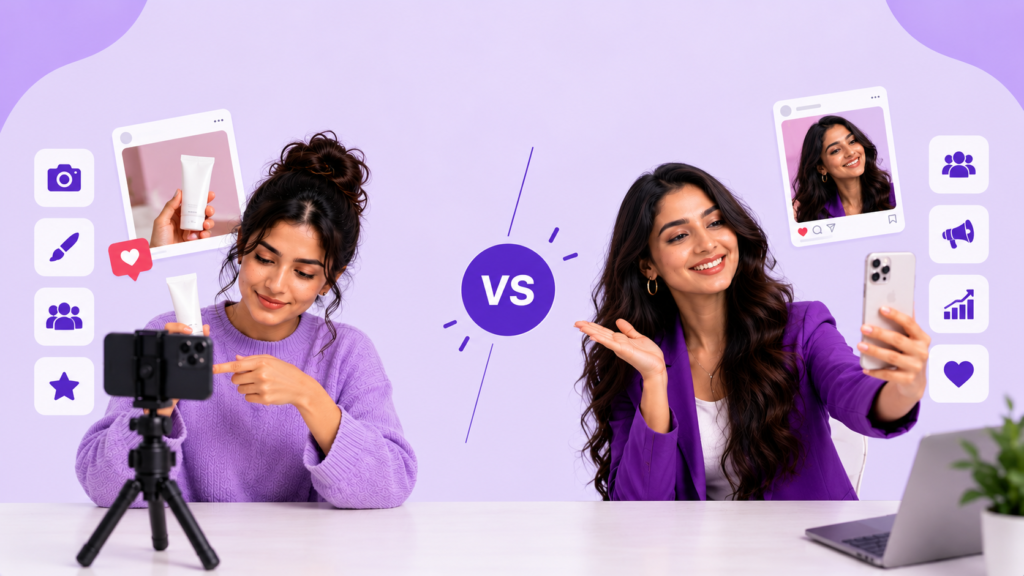
A UGC creator creates content for the brand.
An influencer promotes content to their audience.
Both can be valuable, but they serve different marketing goals.
Here is a simple comparison:
| Point | UGC Creator | Influencer |
| Main value | Content creation | Audience reach |
| Follower count | Not always important | Usually important |
| Posting requirement | May not post on own profile | Usually posts on own profile |
| Brand usage | Brand uses the content | Content reaches influencer’s audience |
| Best for | Ads, websites, product pages, social media content | Awareness, reach, trust, engagement |
| Payment basis | Content quality, usage rights, deliverables | Audience size, reach, engagement, deliverables |
| Goal | Create authentic content | Influence an audience |
| Example | Creator makes product demo for brand ads | Influencer posts product review to followers |
This difference helps brands choose the right creator based on campaign goals.
Key Differences Between UGC Creators and Influencers
1. Purpose of Collaboration
The purpose of hiring a UGC creator is to get authentic content.
The purpose of hiring an influencer is to reach an audience.
If your brand needs videos for ads, website, landing pages, or product pages, a UGC creator may be the better choice.
If your brand wants visibility, awareness, engagement, or traffic from a creator’s audience, an influencer may be the better choice.
2. Importance of Followers
For influencers, followers matter because brands are paying to access their audience.
Follower count, audience quality, engagement rate, niche, and reach are important factors.
For UGC creators, followers are not always important. A UGC creator may have only 1,000 followers, but if they can create high-quality product videos, brands may still hire them.
In UGC, content skill matters more than follower size.
In influencer marketing, audience trust and reach matter more.
3. Where the Content Is Posted
Influencers usually post content on their own profile.
For example:
- Instagram Reel
- Instagram Story
- YouTube video
- LinkedIn post
- Facebook post
UGC creators may create content and send it to the brand without posting it on their own page.
The brand can then use the content on:
- Paid ads
- Brand social media
- Website
- Product pages
- Landing pages
- Email campaigns
- WhatsApp campaigns
- App store creatives
This is one of the biggest differences.
4. Content Style
UGC content usually looks natural, simple, and customer-like.
It may feel like:
- A real review
- A daily routine video
- A product demo
- A testimonial
- A casual recommendation
- A problem-solution video
Influencer content also can feel natural, but it is usually created for the influencer’s audience and follows their personal content style.
For example, a YouTube tech influencer may create a detailed review video because their audience expects deep analysis. A UGC creator may create a short 30-second app demo video that the brand can use in ads.
5. Payment Structure
UGC creators are usually paid based on content deliverables and usage rights.
Their pricing may depend on:
- Number of videos
- Video length
- Editing quality
- Script requirement
- Revisions
- Turnaround time
- Usage rights
- Paid ad usage
- Raw footage requirement
Influencers are usually paid based on audience and campaign deliverables.
Their pricing may depend on:
- Follower count
- Reach
- Engagement rate
- Platform
- Niche
- Number of posts
- Number of stories
- Video duration
- Brand exclusivity
- Campaign timeline
This is why a UGC creator with few followers can still charge for content, while an influencer charges mainly because of audience access.
6. Campaign Goal
UGC creators are best when your goal is content production.
Influencers are best when your goal is audience reach.
Choose a UGC creator when you need:
- Product videos
- Testimonials
- Ad creatives
- Social media content
- Landing page content
- Product page videos
- Customer-style reviews
- Short-form video content
Choose an influencer when you need:
- Brand awareness
- Audience reach
- Engagement
- Traffic
- Leads
- Sales
- Brand trust
- Product discovery
- Community building
The right choice depends on what your brand wants to achieve.
When Should Brands Hire a UGC Creator?
Brands should hire a UGC creator when they need authentic content that can be used across marketing channels.
A UGC creator is a good choice when your brand wants:
1. Content for Paid Ads
UGC-style ads can feel more natural than traditional brand ads.
A creator can make videos that show real product usage, common problems, customer experience, or product benefits.
2. Social Media Content
Brands need regular content for Instagram, Facebook, YouTube Shorts, LinkedIn, and other platforms.
UGC creators can help fill the content calendar with relatable videos and posts.
3. Website and Landing Page Content
A good testimonial or product demo can improve trust on a landing page.
UGC videos can show visitors how the product works in real life.
4. Product Page Content
For e-commerce and D2C brands, product pages with real usage videos can help customers make decisions.
5. Product Education
If your product needs explanation, a UGC creator can make a simple demo or tutorial.
6. Low-Budget Content Production
UGC content can be more affordable than professional production shoots, especially for small businesses and startups.
When Should Brands Hire an Influencer?
Brands should hire an influencer when they want to reach a specific audience through a trusted creator.
An influencer is a good choice when your brand wants:
1. Brand Awareness
Influencers can introduce your brand to new audiences.
2. Product Launch Visibility
A creator with a relevant audience can create buzz around a new product.
3. Audience Trust
If followers trust the influencer, their recommendation can make your brand feel more credible.
4. Website Traffic
Influencers can share links, stories, videos, and posts that drive visitors to your website.
5. Leads or Sales
With proper tracking, coupon codes, and landing pages, influencers can support conversions.
6. Community Building
Influencers can help brands connect with niche communities.
For example, a finance creator can help a fintech brand reach people interested in money management. A parenting creator can help a baby care brand reach young parents.
Can a Creator Be Both a UGC Creator and an Influencer?
Yes, a creator can be both.
Some creators have strong content creation skills and also have an engaged audience.
In this case, the brand can hire them for both:
- Content creation
- Posting on their own profile
For example, a beauty creator may create a skincare review video and post it on their Instagram page. The brand may also get usage rights to reuse that same video in ads.
This gives the brand both reach and content.
However, brands should clearly discuss both parts:
- Will the creator post the content?
- Can the brand reuse the content?
- Are paid ad rights included?
- How long can the brand use the content?
- Is there an extra charge for usage rights?
Clear terms avoid confusion later.
UGC Creator vs Influencer: Which One Is Better for Your Brand?
There is no single better option. It depends on your goal.
Choose a UGC Creator If:
- You need content for ads.
- You need product demo videos.
- You need testimonials.
- You need social media content.
- You need website or landing page content.
- You do not need the creator to post.
- You care more about content quality than follower count.
- You want content that feels real and relatable.
Choose an Influencer If:
- You want to reach a creator’s audience.
- You want brand awareness.
- You want engagement.
- You want product discovery.
- You want traffic, leads, or sales.
- You want audience trust.
- You want creators to post on their own profiles.
Choose Both If:
- You want reach and content.
- You want the creator to post and give usage rights.
- You want to run ads using influencer content.
- You want organic promotion plus paid marketing assets.
- You want long-term creator partnerships.
For many brands, the best strategy is not UGC creator vs influencer. It is UGC creator plus influencer.
Examples for Brands
Example 1: D2C Skincare Brand
A skincare brand wants more product trust and better ads.
Best choice: UGC creator + micro influencer.
Why?
UGC creators can make product demo videos, before-after content, and testimonial-style ads. Micro influencers can post reviews to their audience and drive awareness.
Example 2: Local Café
A café wants more local footfall.
Best choice: Local influencer.
Why?
The café needs people from the same city or area to visit. A local food influencer can reach the right audience.
UGC can also help if the café wants videos for its own Instagram page.
Example 3: SaaS Tool
A SaaS brand wants to explain its product simply.
Best choice: UGC creator or niche influencer.
Why?
A UGC creator can make screen-recorded tutorials and explainer videos. A LinkedIn or YouTube influencer can reach business users if audience reach is needed.
Example 4: Fashion Brand
A fashion brand wants styling content and sales.
Best choice: UGC creators + fashion influencers.
Why?
UGC creators can create styling videos for ads and product pages. Fashion influencers can show the outfits to their followers and drive interest.
Example 5: Mobile App
An app wants downloads.
Best choice: Influencer + UGC creator.
Why?
Influencers can create awareness and send traffic. UGC creators can make app demo ads and problem-solution videos for paid campaigns.
Common Mistakes Brands Make
1. Hiring a UGC Creator and Expecting Reach
If you hire a UGC creator only for content, do not expect results from their audience unless posting is included.
2. Hiring an Influencer Only for Content
Some influencers may create good content, but their pricing may include audience access. If you only need content, a UGC creator may be more cost-effective.
3. Not Discussing Usage Rights
If you want to use creator content in ads or on your website, confirm usage rights clearly.
4. Choosing Only by Followers
For UGC, follower count is not the main factor. Content skill matters more.
5. Ignoring Audience Quality
For influencers, audience quality is very important. A large audience is not useful if it is fake, inactive, or irrelevant.
6. Not Defining Campaign Goals
Before hiring any creator, decide whether you need content, reach, trust, traffic, leads, sales, or all of these.
7. Giving an Unclear Brief
Both UGC creators and influencers need a clear brief to create effective content.
How to Work With UGC Creators and Influencers
Whether you hire a UGC creator or influencer, follow a clear process.
1. Define Your Goal
Decide what you need:
- Content
- Awareness
- Engagement
- Traffic
- Leads
- Sales
- UGC assets
- Product education
2. Choose the Right Creator Type
If you need content, choose a UGC creator.
If you need audience reach, choose an influencer.
If you need both, choose a creator who can provide both.
3. Share a Clear Brief
Include:
- Brand introduction
- Campaign goal
- Product details
- Target audience
- Key message
- Deliverables
- Timeline
- Do’s and don’ts
- Usage rights
- Tracking requirements
4. Confirm Commercial Terms
Discuss:
- Pricing
- Deliverables
- Posting requirement
- Usage rights
- Paid ad rights
- Revisions
- Payment timeline
- Reporting
5. Track Performance
For influencer campaigns, track:
- Reach
- Impressions
- Engagement
- Link clicks
- Leads
- Sales
- Coupon code usage
For UGC content, track:
- Content quality
- Ad performance
- Click-through rate
- Conversion rate
- Cost per result
- Reuse value
- Engagement on brand channels
UGC Creator vs Influencer: Final Decision Checklist
Before hiring a creator, ask yourself:
- Do we need content or audience reach?
- Will the creator post on their own profile?
- Do we need usage rights?
- Will the content be used in ads?
- Is follower count important for this campaign?
- Do we need product education or brand awareness?
- What platform will the content be used on?
- What is our campaign goal?
- How will we track results?
- What is our budget?
If your main need is content, choose a UGC creator.
If your main need is reach, choose an influencer.
If you need both, choose a creator who can do both or run a mixed campaign.
How Influnets Can Help Brands Find the Right Creators
Finding the right creator can take time.
Brands need to decide whether they need a UGC creator, influencer, or both. Then they need to search, shortlist, check content quality, review audience fit, discuss pricing, and manage collaboration details.
Influnets helps brands discover and connect with relevant creators for campaigns.
Whether a brand needs UGC content, influencer promotion, product reviews, brand awareness, or creator-led campaigns, Influnets can make creator discovery more organized and easier.
The goal is not just to find any creator.
The goal is to find the right creator for the right campaign.
Conclusion
UGC creators and influencers both help brands grow, but they are not the same.
A UGC creator is hired mainly for content.
An influencer is hired mainly for audience reach.
UGC creators help brands create authentic videos, testimonials, demos, ads, and social media content. Influencers help brands reach people, build awareness, drive engagement, and create trust through their audience.
For some campaigns, a UGC creator is the better choice. For other campaigns, an influencer is better. And for many modern campaigns, brands should use both.
If your brand needs content, choose UGC.
If your brand needs reach, choose influencers.
If your brand needs content plus reach, combine both.
The best creator strategy depends on your goal, audience, budget, platform, and campaign plan.
In the end, successful creator marketing is not about choosing between UGC creators and influencers. It is about choosing the right creator for the right purpose.
FAQs
What is the difference between a UGC creator and an influencer?
A UGC creator is mainly hired to create content for the brand. An influencer is mainly hired to promote the brand to their own audience. UGC focuses on content, while influencer marketing focuses on audience reach.
Do UGC creators need followers?
No, UGC creators do not always need a large following. Brands usually hire UGC creators for their content creation skills, not their audience size.
Do influencers create UGC content?
Yes, some influencers can also create UGC-style content. However, if the brand wants to reuse that content in ads or on its website, usage rights should be discussed clearly.
Which is better: UGC creator or influencer?
Neither is always better. A UGC creator is better when the brand needs content. An influencer is better when the brand needs reach, awareness, engagement, or traffic from the creator’s audience.
Can brands use both UGC creators and influencers?
Yes, brands can use both. A brand can hire UGC creators for content and influencers for reach. Some creators can also provide both content creation and posting.
Why do brands pay UGC creators?
Brands pay UGC creators because they can create authentic, relatable, and useful content for ads, social media, websites, landing pages, product pages, and testimonials.
When should a brand hire an influencer?
A brand should hire an influencer when it wants to reach a specific audience, build awareness, generate engagement, drive traffic, create trust, or promote a product through the creator’s profile.
How can Influnets help brands find creators?
Influnets helps brands discover and connect with relevant creators for campaigns, making it easier to find UGC creators, influencers, and creator partners based on campaign needs.