Small businesses in India are changing the way they promote their products and services.
Earlier, many small businesses depended on word-of-mouth, local newspaper ads, pamphlets, hoardings, referrals, and basic social media posts. These methods still have value, but customer behavior has changed.
Today, people discover products through Instagram Reels, YouTube Shorts, creator reviews, local food bloggers, fashion creators, tech reviewers, mom influencers, fitness creators, and regional content pages.
Before buying a product, visiting a café, joining a gym, choosing a salon, downloading an app, or trying a new service, many customers first check online content and social proof.
This is where influencer marketing becomes important for small businesses in India.
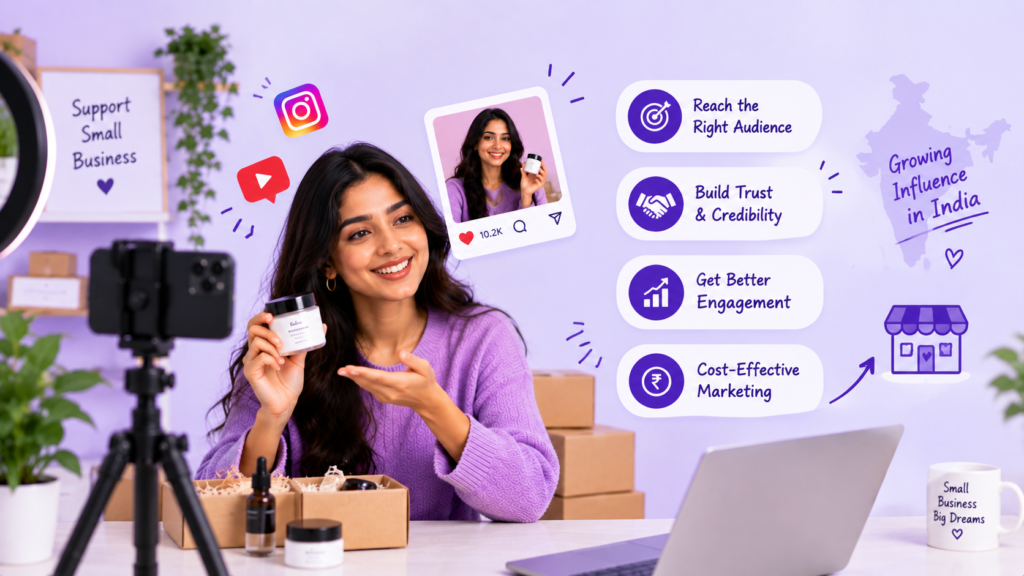
Influencer marketing helps small businesses reach people through creators they already follow and trust. It allows businesses to promote products in a more relatable, local, and human way.
The best part is that small businesses do not always need celebrity influencers or big budgets. They can work with nano influencers, micro influencers, local creators, UGC creators, and niche creators who have relevant audiences.
In this blog, we will explain why influencer marketing is becoming important for small businesses in India and how small brands can use it smartly.
What Is Influencer Marketing for Small Businesses?
Influencer marketing is a marketing strategy where a business collaborates with a creator or influencer to promote its product, service, store, app, or campaign.
For small businesses, influencer marketing usually means working with creators who have a relevant and trusted audience.
These creators may be:
- Local food bloggers
- Fashion creators
- Beauty creators
- Fitness influencers
- Parenting creators
- Finance educators
- Travel creators
- Student creators
- Business creators
- Tech reviewers
- Lifestyle creators
- Regional language creators
- UGC creators
- Nano and micro influencers
For example:
A café in Delhi can work with local food creators.
A boutique in Jaipur can work with fashion influencers.
A salon in Mumbai can collaborate with beauty creators.
A gym in Pune can work with fitness creators.
A D2C skincare brand can work with micro beauty influencers.
A coaching institute can work with student creators.
A mobile app can work with creators who can explain the app in simple videos.
Influencer marketing is not only about reach. It is about trust, relevance, content, and action.
Why Influencer Marketing Is Growing in India
India has become one of the most active digital markets in the world.
People are spending more time on smartphones, social media, video platforms, and creator-led content. Short videos, reels, reviews, tutorials, and regional content are influencing how people discover and evaluate brands.
For small businesses, this shift is important.
Customers are no longer only listening to brand advertisements. They are also listening to creators, reviewers, local pages, and people who feel relatable.
Influencer marketing is growing because:
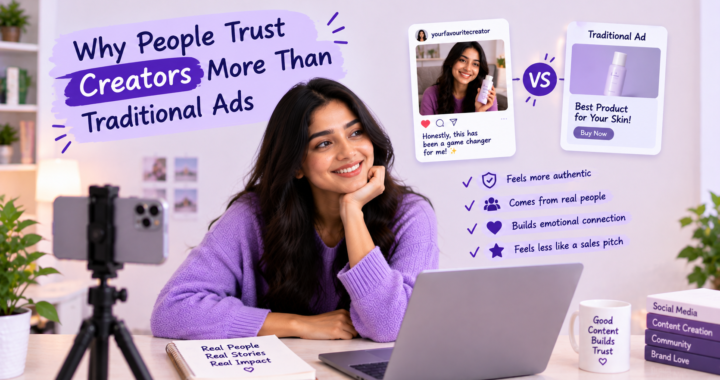
- People trust creators more than direct ads.
- Short-form video content is easy to consume.
- Local creators can influence city-level audiences.
- Regional language content connects deeply with users.
- Small businesses can start with low budgets.
- UGC content gives brands more authentic marketing material.
- Customers want proof before buying.
- Brands want measurable and targeted promotion.
For Indian small businesses, this creates a big opportunity.
Why Influencer Marketing Is Important for Small Businesses in India
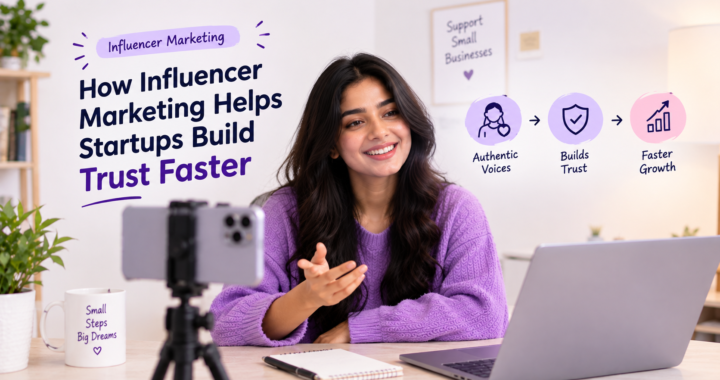
1. It Helps Build Trust Faster
Trust is one of the biggest challenges for small businesses.
Big brands already have recognition, but small businesses often need to prove themselves.
When a trusted creator talks about a small business, it gives the brand instant social proof.
For example, if a local food blogger visits a new café and shares an honest experience, their audience may feel more confident about visiting that café.
If a beauty creator reviews a small skincare brand, potential buyers may feel safer trying the product.
Influencer content feels more personal than normal advertising because it comes from a real person.
For small businesses, this trust can be very valuable.
2. It Makes Local Marketing More Powerful
Many small businesses serve customers in a specific city, area, or region.
For them, local influencers can be more useful than national celebrities.
For example:
A restaurant in Lucknow does not need a celebrity from Mumbai. It needs creators followed by people in Lucknow.
A salon in Jaipur needs beauty and lifestyle creators from Jaipur.
A gym in Noida needs local fitness creators or lifestyle influencers whose followers are nearby.
Local creators help small businesses reach people who can actually visit, buy, or inquire.
This makes influencer marketing practical for location-based businesses.
3. It Is More Affordable Than Traditional Advertising
Traditional advertising can be expensive for small businesses.
Hoardings, newspaper ads, radio ads, large video shoots, and celebrity promotions may not fit a small business budget.
Influencer marketing can be more flexible.
Small businesses can start with:
- Product gifting
- Barter collaborations
- Nano influencers
- Micro influencers
- Local creators
- Affiliate campaigns
- UGC content
- Small paid collaborations
This makes influencer marketing more accessible.
A small business can test a campaign with a few local creators before increasing the budget.
Instead of spending everything on one big campaign, brands can test, learn, and scale gradually.
4. It Helps Small Businesses Reach the Right Audience
One of the biggest benefits of influencer marketing is targeting.
A small business does not need to reach everyone. It needs to reach the right people.
For example:
A baby care brand should reach parents.
A gym should reach fitness-conscious people nearby.
A café should reach food lovers in the same city.
A coaching institute should reach students and parents.
A D2C fashion brand should reach people interested in style and shopping.
Influencers usually build audiences around specific interests.
This helps small businesses reach customers who are already interested in their category.
5. It Creates Content That Feels Real
Small businesses often struggle with content creation.
They may not have a big creative team, professional studio, or regular video production setup.
Influencers and UGC creators can help create content that looks real and relatable.
This content can include:
- Product reviews
- Store visit videos
- Unboxing videos
- Customer-style testimonials
- Product demos
- Before-after videos
- Short reels
- Tutorials
- Local experience videos
This type of content is useful because it shows the brand in real life.
For example, a creator visiting a café and showing the ambience, food, service, and pricing can be more convincing than a simple promotional poster.
6. It Supports Word-of-Mouth Marketing
Indian customers often trust recommendations.
People ask friends, family, colleagues, and online communities before trying something new.
Influencer marketing is like digital word-of-mouth.
When creators share their experience, it can influence their followers’ opinions.
For small businesses, this can help generate:
- Brand awareness
- Profile visits
- Website visits
- Store visits
- WhatsApp inquiries
- Product trials
- Reviews
- Social media growth
- Sales
A good influencer campaign can start conversations around a small brand.
7. It Helps Small Brands Compete With Bigger Brands
Small businesses may not have the advertising budget of big companies, but they can still compete through niche and local influence.
A local creator can make a small brand feel visible and trustworthy in a specific market.
For example:
A small handmade jewellery brand may not compete with large fashion companies nationally, but it can build a strong community through fashion creators, local influencers, and UGC content.
A small café may not run big ads, but it can become popular in its city through food bloggers and local reels.
Influencer marketing helps small businesses create visibility without needing huge budgets.
8. It Works Well With Regional and Vernacular Content
India is not one single language market.
Customers consume content in Hindi, Tamil, Telugu, Bengali, Marathi, Kannada, Malayalam, Punjabi, Gujarati, and many other languages.
Regional creators understand local culture, language, humour, festivals, habits, and buying behaviour.
This makes their content more relatable.
For small businesses in India, regional influencer marketing can be very powerful.
For example:
A local fashion brand in Gujarat can work with Gujarati lifestyle creators.
A food brand in Tamil Nadu can work with Tamil food creators.
A coaching institute in Uttar Pradesh can work with Hindi-speaking student creators.
A local service business in Maharashtra can work with Marathi creators.
Regional content helps small brands connect more naturally with their audience.
9. It Helps Generate Social Proof
Social proof means people feel more confident when they see others using, reviewing, or recommending a product.
Influencer content creates social proof for small businesses.
This can include:
- Creator reviews
- Customer-style videos
- Product testimonials
- Store visit reels
- Comments from interested users
- Tagged posts
- Unboxing content
- Before-after videos
- User experience stories
Social proof is important because customers do not want to take risk.
When they see a creator using your product or visiting your business, they may feel more comfortable trying it.
10. It Can Drive Measurable Results
Influencer marketing is not only about awareness. Small businesses can also track results.
They can use:
- Coupon codes
- UTM links
- WhatsApp inquiry links
- Landing pages
- Affiliate links
- Google Forms
- Creator insights
- Website analytics
- Store visit tracking
- “How did you hear about us?” questions
For example:
A café can give a creator a special code for followers.
A D2C brand can track sales using coupon codes.
A coaching institute can track inquiries through a landing page.
A local salon can track appointments from influencer stories.
When tracked properly, influencer marketing becomes more measurable and useful.
Best Types of Influencers for Small Businesses in India
Small businesses should choose creators based on campaign goals and audience fit.
1. Nano Influencers
Nano influencers usually have a smaller audience but strong personal trust.
Best for:
- Local businesses
- Product trials
- Community marketing
- Low-budget campaigns
- Authentic reviews
2. Micro Influencers
Micro influencers have a larger audience than nano creators and are often useful for niche campaigns.
Best for:
- D2C brands
- Startups
- Product launches
- App promotions
- Lead generation
- Social media growth
3. Local Creators
Local creators are very useful for city-based businesses.
Best for:
- Cafés
- Restaurants
- Salons
- Gyms
- Clinics
- Events
- Retail stores
- Coaching institutes
4. UGC Creators
UGC creators help brands create relatable content even if they do not have a large audience.
Best for:
- Ads
- Product pages
- Social media content
- Testimonials
- Reels
- Landing pages
5. Regional Language Creators
Regional creators can help businesses connect with audiences in local languages.
Best for:
- State-level brands
- Regional products
- Local services
- Vernacular campaigns
- Tier 2 and Tier 3 markets
Examples of Influencer Marketing for Small Businesses in India
Example 1: Local Café
A café in Delhi collaborates with 5 local food bloggers.
The creators visit the café, try the food, create reels, and share stories with location tags.
Possible results:
- More local awareness
- More Instagram profile visits
- More store visits
- More Google reviews
- More word-of-mouth
Example 2: Small Fashion Brand
A small ethnic wear brand works with fashion creators.
The creators style outfits in reels and share shopping links.
Possible results:
- Product visibility
- Website traffic
- Social media growth
- Orders through coupon codes
- Reusable styling content
Example 3: Coaching Institute
A coaching institute works with student creators and education influencers.
The creators talk about course benefits, student problems, and exam preparation.
Possible results:
- More inquiries
- More demo class registrations
- Better trust among students
- More local awareness
Example 4: Skincare Startup
A skincare startup sends products to nano and micro beauty creators.
Creators share honest reviews, routines, and before-after content.
Possible results:
- More trust
- Product trials
- Website visits
- Content for ads
- Sales through discount codes
Example 5: Local Gym
A gym works with fitness creators from the same city.
Creators create workout videos, transformation stories, and facility tours.
Possible results:
- More trial bookings
- More local awareness
- More membership inquiries
- Better credibility
How Small Businesses Can Start Influencer Marketing
1. Define Your Goal
Decide what you want:
- Awareness
- Sales
- Store visits
- Leads
- App downloads
- Content
- Reviews
- Social media growth
2. Identify Your Target Audience
Understand who you want to reach.
Check:
- Age
- Location
- Language
- Interests
- Buying behaviour
- Platform usage
3. Choose the Right Creator Type
Pick creators based on your goal.
For local reach, choose local creators.
For niche trust, choose micro influencers.
For content, choose UGC creators.
For low budget, choose nano influencers.
4. Check Creator Quality
Before collaborating, check:
- Audience relevance
- Engagement quality
- Comment quality
- Fake followers
- Content style
- Past collaborations
- Audience location
- Professionalism
5. Start Small
Do not spend your full budget in one campaign.
Start with a small test campaign and measure results.
6. Give a Clear Brief
Tell the creator:
- What to promote
- What message to share
- What content format is needed
- What hashtags to use
- What link or code to share
- What timeline to follow
7. Track Results
Use coupon codes, tracking links, WhatsApp links, or landing pages to measure campaign performance.
Common Mistakes Small Businesses Should Avoid
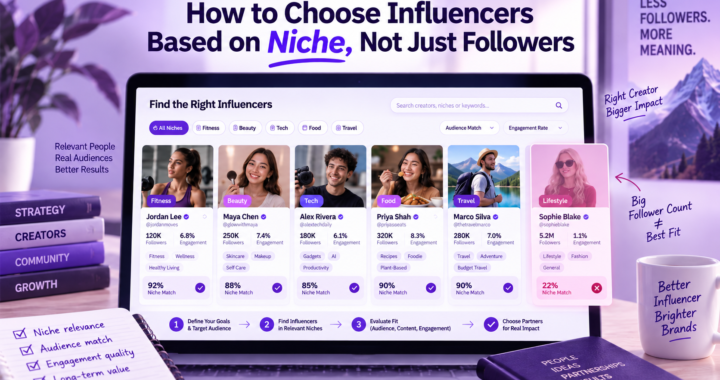
1. Choosing Only by Followers
A big follower count does not always mean better results. Audience relevance matters more.
2. Ignoring Local Audience
For location-based businesses, local audience is more important than national reach.
3. Not Checking Fake Followers
Fake followers can waste your budget. Always check engagement quality and audience authenticity.
4. Not Giving a Clear Brief
Creators need clear instructions to create useful content.
5. Expecting Instant Sales From Every Campaign
Influencer marketing can support awareness, trust, content, traffic, and sales. Not every campaign will immediately generate revenue.
6. Not Tracking Performance
Without tracking, you cannot know which creator performed well.
7. Working With Irrelevant Creators
A creator should match your brand, audience, location, and campaign goal.
How Influnets Can Help Small Businesses in India
Finding the right influencer manually can take time.
Small businesses usually do not have large marketing teams. They may not have enough time to search creators, check profiles, compare engagement, message influencers, discuss pricing, and manage collaboration details.
Influnets helps brands discover and connect with relevant creators for influencer campaigns.
For small businesses, Influnets can make the influencer discovery process more organized and easier.
Brands can explore creators based on category, campaign needs, collaboration type, and audience fit.
Instead of randomly searching for influencers, small businesses can use Influnets to find creators who are more relevant to their goals.
Whether you are a local business, D2C brand, startup, service provider, or online seller, influencer marketing can help you build trust and reach the right audience when done properly.
Conclusion
Influencer marketing is becoming important for small businesses in India because customer behaviour has changed.
People now discover brands through creators, short videos, reviews, recommendations, local pages, and regional content.
For small businesses, influencer marketing offers a practical way to build trust, reach local audiences, create relatable content, generate social proof, and compete with bigger brands.
Small businesses do not need huge budgets to start. They can begin with nano influencers, micro influencers, local creators, UGC creators, barter collaborations, and small test campaigns.
The key is to choose the right creator, give a clear brief, and track results properly.
Influencer marketing is not just for big brands anymore.
For Indian small businesses, it can become a powerful and affordable way to grow visibility, trust, and customer interest.
FAQs
Why is influencer marketing important for small businesses in India?
Influencer marketing is important for small businesses in India because it helps them build trust, reach local audiences, create relatable content, generate social proof, and promote products through creators people already follow.
Can small businesses afford influencer marketing?
Yes, small businesses can afford influencer marketing by working with nano influencers, micro influencers, local creators, UGC creators, barter collaborations, and affiliate-based campaigns.
Which influencers are best for small businesses?
Nano influencers, micro influencers, local creators, and regional language creators are often best for small businesses because they are more affordable, targeted, and relatable.
How can local businesses use influencer marketing?
Local businesses can work with creators from the same city or area to promote store visits, product trials, events, restaurant visits, salon services, gym memberships, and local offers.
Is influencer marketing better than traditional advertising for small businesses?
Influencer marketing can be more targeted and relatable than traditional advertising, especially for small businesses with limited budgets. However, the best choice depends on the business goal, audience, and budget.
How can small businesses measure influencer marketing results?
Small businesses can measure results using coupon codes, UTM links, WhatsApp inquiry links, landing pages, creator insights, sales data, website analytics, and customer feedback.
Do small businesses need celebrity influencers?
No, small businesses usually do not need celebrity influencers. They can get better practical results by working with relevant nano, micro, local, or niche creators.
How can Influnets help small businesses?
Influnets helps small businesses discover and connect with relevant creators, making influencer discovery and campaign planning more organized and easier.