Influencer marketing is one of the fastest-growing ways for brands to reach customers through people they already trust.
Earlier, brands mostly depended on TV ads, newspaper ads, celebrity endorsements, or traditional digital ads to promote their products. But today, people spend more time on social media platforms like Instagram, YouTube, LinkedIn, Facebook, and other content platforms. They follow creators, watch their videos, trust their opinions, and often make buying decisions based on their recommendations.
That is where influencer marketing comes in.
In simple words, influencer marketing is a marketing strategy where brands collaborate with social media creators or influencers to promote their products, services, offers, or campaigns to a relevant audience.
For example, if a skincare brand collaborates with a beauty creator to review its product, that is influencer marketing. If a fitness app works with a fitness coach to promote its workout plan, that is also influencer marketing. If a local restaurant invites a food blogger to create content about its menu, that is influencer marketing too.
But influencer marketing is not just about paying someone to post about your brand. When done properly, it is about building trust, creating useful content, reaching the right audience, and turning attention into action.
What Is Influencer Marketing?
Influencer marketing is a type of marketing where a brand works with an influencer to promote a product, service, campaign, or message.
An influencer is a person who has built an audience on social media or digital platforms. Their audience follows them because of their content, knowledge, personality, lifestyle, experience, or niche expertise.
Influencers can be from different categories, such as:
- Fashion
- Beauty
- Fitness
- Travel
- Food
- Technology
- Finance
- Parenting
- Education
- Gaming
- Business
- Lifestyle
- Health and wellness
For brands, influencers act as a bridge between the business and the customer. Instead of the brand directly saying, “Buy our product,” the influencer shares the product in a more natural, relatable, and content-driven way.
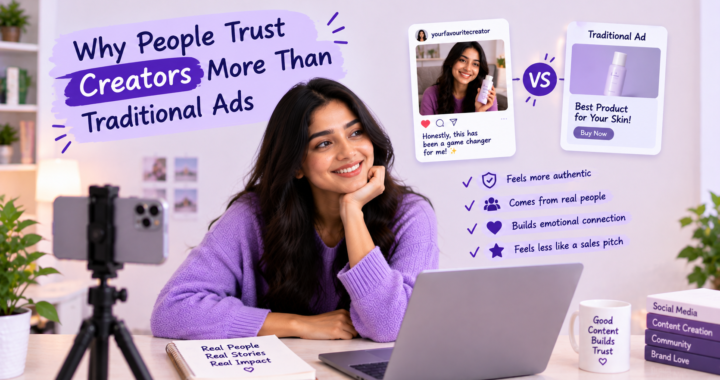
This is why influencer marketing feels more human than traditional advertising.
How Does Influencer Marketing Work?
Influencer marketing works through collaboration between a brand and a creator.
The brand wants to reach a specific type of audience. The influencer already has that audience. So, both come together to create content that introduces the brand to potential customers.
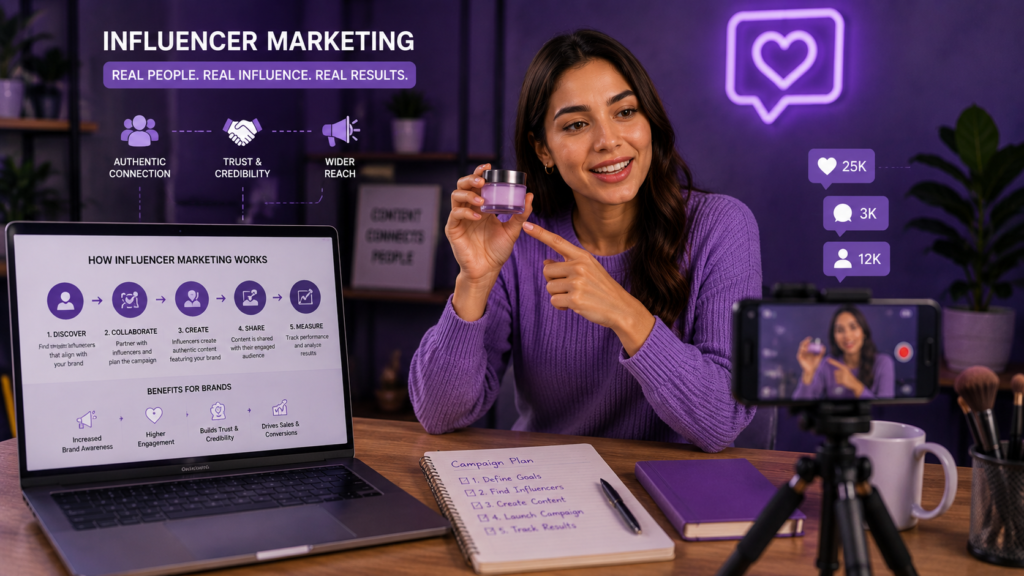
Here is how it usually works:
1. The Brand Sets a Campaign Goal
Before working with an influencer, the brand needs to decide what it wants to achieve.
Common influencer marketing goals include:
- Brand awareness
- Product promotion
- Website traffic
- App downloads
- Lead generation
- Sales
- Social media engagement
- Product reviews
- User-generated content
- Event promotion
For example, a new fashion brand may want awareness. A SaaS company may want leads. A mobile app may want downloads. A restaurant may want more footfall.
The campaign goal decides which influencer, platform, content format, and budget will be suitable.
2. The Brand Identifies the Right Influencer
Choosing the right influencer is one of the most important steps in influencer marketing.
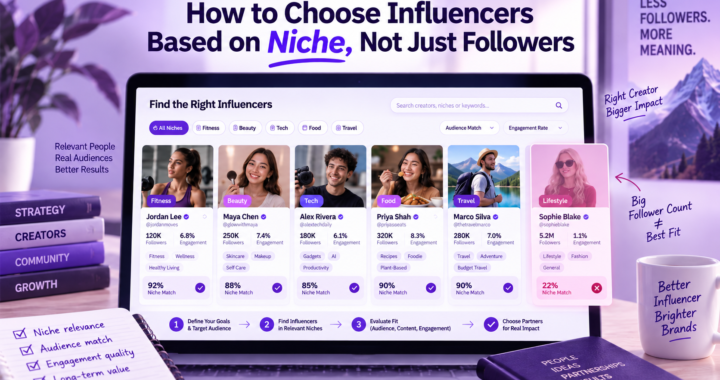
Many brands make the mistake of choosing influencers only by follower count. But follower count alone does not guarantee results.
A brand should check:
- Audience relevance
- Engagement rate
- Content quality
- Niche expertise
- Audience location
- Past brand collaborations
- Authenticity
- Comment quality
- Posting consistency
- Brand fit
For example, if you are a fitness brand, working with a fitness creator with 20,000 engaged followers can be more useful than working with a random lifestyle influencer with 2 lakh followers.
The right influencer is not always the biggest influencer. The right influencer is the one whose audience matches your target customer.
3. The Brand Shares a Clear Campaign Brief
Once the brand selects the influencer, the next step is to share a campaign brief.
A campaign brief explains what the brand wants from the collaboration.
A good influencer campaign brief should include:
- Brand introduction
- Campaign goal
- Product or service details
- Target audience
- Key message
- Content format
- Number of posts or videos
- Posting deadline
- Do’s and don’ts
- Hashtags and mentions
- Content approval process
- Payment or collaboration terms
A clear brief helps the influencer understand the brand’s expectations. It also reduces confusion and improves content quality.
However, brands should avoid controlling every single word. Influencers understand their audience better. So, the best results usually come when the brand gives clear direction but also allows creative freedom.
4. The Influencer Creates Content
After understanding the campaign brief, the influencer creates content for the brand.
This content can be in different formats, such as:
- Instagram Reel
- Instagram Story
- YouTube video
- YouTube Shorts
- LinkedIn post
- Product review
- Unboxing video
- Tutorial
- Testimonial
- Blog post
- Live session
- Giveaway post
The type of content depends on the brand’s goal and the influencer’s platform.
For example, if the goal is quick awareness, short-form videos like Reels or Shorts may work well. If the goal is detailed product education, YouTube videos or long-form content may be better.
Good influencer content does not look like a forced advertisement. It feels natural, helpful, and relatable.
5. The Content Goes Live
Once the content is approved, the influencer publishes it on their platform.
At this stage, the brand should track the post performance closely.
Important metrics may include:
- Reach
- Impressions
- Likes
- Comments
- Shares
- Saves
- Story views
- Link clicks
- Website visits
- Coupon code usage
- Leads
- Sales
- Cost per result
The right metric depends on the campaign goal.
For example, if your goal is brand awareness, reach and impressions matter. If your goal is sales, conversions and revenue matter. If your goal is leads, form submissions or signups matter.
6. The Brand Measures Campaign Performance
Influencer marketing should not end after the post goes live. Brands should always measure campaign performance.
This helps the brand understand:
- Which influencer performed well
- Which content format worked best
- Which platform gave better results
- What type of message attracted the audience
- Whether the campaign generated useful ROI
- What can be improved in the next campaign
Without measurement, influencer marketing becomes guesswork. With measurement, it becomes a repeatable growth channel.
Why Do Brands Use Influencer Marketing?
Brands use influencer marketing because it helps them reach customers in a more trusted and relatable way.
Here are some major benefits:
1. Builds Trust Faster
People may ignore direct ads, but they often listen to creators they follow regularly.
When an influencer talks about a product honestly, it can build trust faster than a normal brand advertisement.
This is especially helpful for new brands that do not yet have strong market recognition.
2. Reaches the Right Audience
Influencers usually build audiences around specific interests.
For example:
- A food creator attracts food lovers
- A tech creator attracts gadget buyers
- A parenting creator attracts parents
- A finance creator attracts people interested in money and investing
This helps brands reach a more relevant audience instead of promoting to everyone randomly.
3. Creates Better Content
Influencers are content creators. They understand how to make content that gets attention.
For brands, this is valuable because they do not just get promotion. They also get creative content that can be used for awareness, engagement, and sometimes even paid ads, depending on the agreement.
4. Supports Purchase Decisions
Many customers check reviews, videos, and social proof before buying.
Influencer content can help customers understand:
- How the product works
- Why it is useful
- Who should use it
- What benefits they can expect
- How it looks in real life
This makes influencer marketing useful not only for awareness but also for customer decision-making.
5. Works for Different Business Sizes
Influencer marketing is not only for big brands.
Small businesses, startups, local brands, D2C brands, SaaS companies, mobile apps, and service-based businesses can also use influencer marketing.
A small brand does not always need a celebrity influencer. It can start with nano or micro influencers who have smaller but more engaged audiences.
Types of Influencers Brands Can Work With
Influencers are usually divided based on their follower count and audience size.
Nano Influencers
Nano influencers have a smaller audience but usually strong personal connection with their followers.
They are useful for local campaigns, niche products, and community-based promotions.
Micro Influencers
Micro influencers have a bigger audience than nano influencers but still maintain strong engagement.
They are often a good choice for brands that want both trust and reach.
Macro Influencers
Macro influencers have a large audience and wider visibility.
They are useful for bigger campaigns, product launches, and large-scale awareness.
Celebrity Influencers
Celebrity influencers have mass reach and strong public recognition.
They can create huge visibility, but they are usually expensive and may not always be suitable for every brand.
The best influencer type depends on the brand’s goal, budget, audience, and campaign strategy.
Example of Influencer Marketing for a Brand
Let’s say a new healthy snack brand wants to promote its product.
Instead of running only paid ads, the brand decides to work with food and fitness creators.
The process may look like this:
- The brand sets a goal: increase product awareness and website sales.
- It finds food bloggers, fitness creators, and lifestyle influencers.
- It sends them a campaign brief and product samples.
- The influencers create recipe videos, snack reviews, and daily routine content.
- The posts go live with a discount code or website link.
- The brand tracks sales, website traffic, and engagement.
- The brand continues working with the best-performing creators.
This is how influencer marketing can help a brand move from awareness to action.
What Makes an Influencer Campaign Successful?
A successful influencer campaign depends on more than just choosing a popular creator.
The most important factors are:
1. Clear Goal
The brand should know exactly what it wants: awareness, leads, sales, app downloads, or content creation.
2. Right Audience Match
The influencer’s audience should match the brand’s target customer.
3. Authentic Content
The content should feel real, not forced or overly promotional.
4. Strong Brief
The influencer should understand the brand message, product benefits, and campaign expectations.
5. Creative Freedom
Influencers should be allowed to present the brand in their own style.
6. Proper Tracking
The brand should track campaign performance using links, coupon codes, UTM parameters, reports, or platform analytics.
7. Long-Term Thinking
One-time posts can work, but long-term influencer relationships often build stronger trust and better results.
Common Mistakes Brands Make in Influencer Marketing
Many brands try influencer marketing but do not get good results because they make basic mistakes.
Here are some common mistakes to avoid:
- Choosing influencers only by follower count
- Not checking fake followers or fake engagement
- Giving unclear campaign briefs
- Not defining campaign goals
- Expecting instant sales from every campaign
- Ignoring audience quality
- Over-controlling the influencer’s content
- Not tracking campaign performance
- Working with creators who do not match the brand
- Not setting clear payment and delivery terms
Avoiding these mistakes can improve the chances of running a successful influencer campaign.
Is Influencer Marketing Good for Every Brand?
Influencer marketing can work for many brands, but it should be planned properly.
It is especially useful for brands that want to:
- Build awareness
- Reach a specific audience
- Launch a new product
- Build social proof
- Generate content
- Educate customers
- Promote offers
- Create trust in a competitive market
However, brands should not treat influencer marketing like magic. It works best when the product, audience, creator, message, and campaign goal are aligned.
How Influnets Can Help Brands With Influencer Marketing
Finding the right influencer manually can take a lot of time.
Brands often have to search on Instagram, check profiles, message creators, compare pricing, verify audience quality, and manage communication separately.
Influnets aims to make this process easier by helping brands discover and connect with relevant creators for their campaigns.
With the right influencer marketplace, brands can save time, compare creators more easily, and start collaborations with better clarity.
Whether you are a startup, small business, D2C brand, agency, or growing company, influencer marketing can become a powerful growth channel when you work with the right creators.
Conclusion
Influencer marketing is a modern marketing strategy where brands collaborate with creators to reach, educate, and influence potential customers.
It works because people trust people more than direct advertisements. When a creator shares a brand message in a natural and authentic way, it can help the brand build awareness, trust, engagement, and even sales.
But successful influencer marketing is not about choosing the influencer with the highest followers. It is about choosing the right influencer for the right audience, with the right message, at the right time.
For brands, influencer marketing can be a smart way to grow — but only when it is planned, tracked, and executed properly.
If your brand is planning to work with influencers, start by defining your campaign goal, understanding your audience, and finding creators who truly match your brand.
Influnets helps brands and creators connect more easily, so influencer collaborations can become simpler, clearer, and more effective.
FAQs
What is influencer marketing in simple words?
Influencer marketing is a strategy where brands work with social media creators to promote their products, services, or campaigns to a relevant audience.
How does influencer marketing work for brands?
Brands choose influencers whose audience matches their target customers. The influencer then creates content about the brand, and the brand tracks results like reach, engagement, leads, sales, or website visits.
Why is influencer marketing important?
Influencer marketing is important because it helps brands build trust, reach targeted audiences, create relatable content, and influence customer decisions through creators people already follow.
Is influencer marketing only for big brands?
No. Influencer marketing can work for startups, small businesses, local businesses, D2C brands, SaaS companies, and service-based brands. Smaller brands can start with nano and micro influencers.
What is the difference between influencer marketing and advertising?
Traditional advertising usually comes directly from the brand. Influencer marketing comes through a creator who already has an audience and trust. That is why influencer content often feels more personal and relatable.
How do brands choose the right influencer?
Brands should check audience relevance, engagement quality, content style, niche, past collaborations, authenticity, location, and whether the influencer’s audience matches the brand’s target customer.
Can influencer marketing generate sales?
Yes, influencer marketing can generate sales, but results depend on the product, creator, audience match, offer, content quality, and campaign tracking.
What should brands avoid in influencer marketing?
Brands should avoid choosing influencers only by follower count, ignoring fake followers, giving unclear briefs, not tracking results, and working with creators who do not match the brand.