Brands today have many ways to promote their products online. Two of the most popular options are influencer marketing and social media ads.
Both can help a brand reach customers, build awareness, generate leads, and drive sales. But they work in different ways.
Influencer marketing helps brands reach people through creators they already follow and trust. Social media ads help brands reach people through paid targeting on platforms like Instagram, Facebook, YouTube, LinkedIn, and other social channels.
Many brands get confused and ask:
Should we spend on influencer marketing or social media ads?
Which one gives better results?
Which one is better for small businesses?
Which one is better for sales?
Which one is better for brand awareness?
The answer is simple: it depends on your goal.
If your brand wants trust, relatable content, social proof, and creator-led recommendations, influencer marketing can be powerful.
If your brand wants control, targeting, scaling, retargeting, and quick testing, social media ads can be very useful.
For many brands, the best strategy is not influencer marketing vs social media ads. The best strategy is influencer marketing plus social media ads.
In this blog, we will explain the difference between influencer marketing and social media ads, their benefits, limitations, and how brands can decide which one is better.
What Is Influencer Marketing?
Influencer marketing is a marketing strategy where brands collaborate with creators or influencers to promote a product, service, campaign, or message.
Influencers have built an audience on platforms like Instagram, YouTube, LinkedIn, Facebook, blogs, podcasts, or other digital channels.
Brands work with influencers because their audience trusts their content, opinions, and recommendations.
Influencer marketing content can include:
- Instagram Reels
- Instagram Stories
- YouTube videos
- YouTube Shorts
- LinkedIn posts
- Product reviews
- Unboxing videos
- Tutorials
- Testimonials
- UGC videos
- Blog mentions
- Giveaway campaigns
- Affiliate collaborations
For example, a skincare brand may work with a beauty creator to review its product. A café may invite a local food influencer to create a reel. A SaaS company may collaborate with a LinkedIn creator to explain its product.
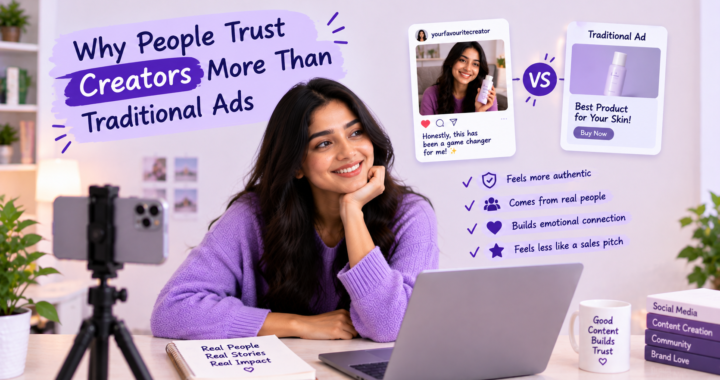
The main strength of influencer marketing is trust.
People may ignore direct ads, but they often pay attention when a creator they trust talks about a product naturally.
What Are Social Media Ads?
Social media ads are paid advertisements shown to users on social media platforms.
Brands pay platforms like Instagram, Facebook, YouTube, LinkedIn, Snapchat, or X to show their ads to a selected audience.
These ads can appear as:
- Feed ads
- Story ads
- Reel ads
- Video ads
- Carousel ads
- Lead form ads
- YouTube ads
- LinkedIn sponsored posts
- Retargeting ads
- App install ads
- Shopping ads
Social media ads allow brands to target users based on different signals such as location, interests, age, behaviour, platform activity, and audience lists.
For example, a fashion brand can run Instagram ads targeting women aged 18–35 interested in fashion and online shopping. A B2B SaaS company can run LinkedIn ads targeting founders, marketers, or business owners.
The main strength of social media ads is control and scalability.
Brands can decide the budget, audience, creative, placement, campaign objective, and duration. They can also test multiple creatives and scale the ones that perform well.
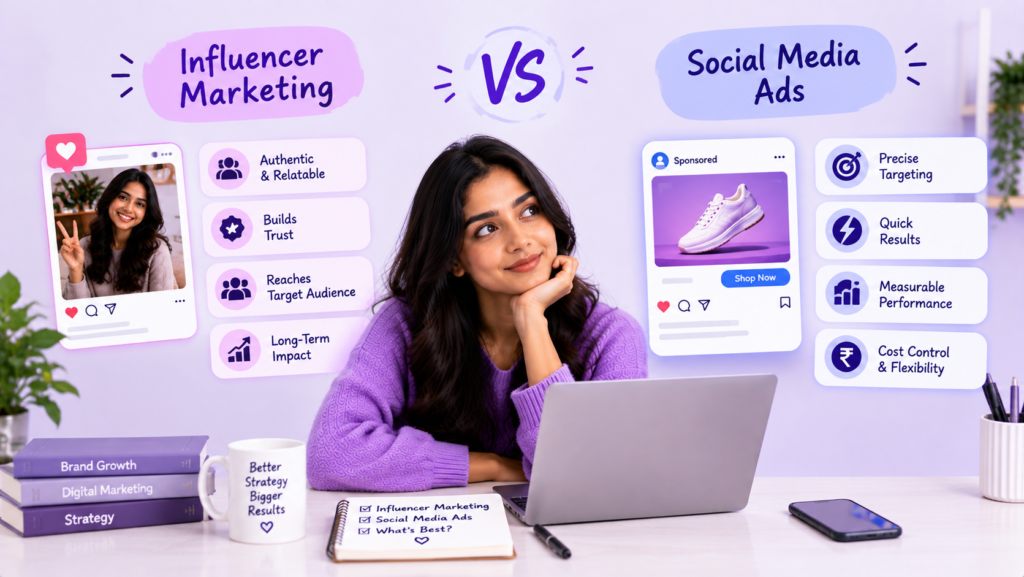
Influencer Marketing vs Social Media Ads: Simple Difference
The main difference is this:
Influencer marketing uses creator trust.
Social media ads use paid targeting.
Influencer marketing depends on a creator’s audience, content style, and credibility.
Social media ads depend on platform targeting, ad creative, budget, and optimization.
Here is a simple comparison:
| Point | Influencer Marketing | Social Media Ads |
| Main strength | Trust and authenticity | Control and scalability |
| Content source | Creator-made content | Brand-made or ad creative |
| Audience access | Influencer’s followers | Platform-targeted audience |
| Best for | Trust, awareness, UGC, social proof | Traffic, retargeting, testing, scaling |
| Control | Lower control, more creator freedom | Higher control |
| Cost style | Creator fee or collaboration cost | Ad spend based on budget |
| Speed | Depends on creator timeline | Can start quickly |
| Tracking | Needs links, codes, reports | Built-in ad analytics |
| Authenticity | Usually higher | Can feel promotional |
| Scalability | Limited by creator reach | Easier to scale with budget |
Both are useful, but they solve different problems.
Benefits of Influencer Marketing
1. Builds Trust Faster
Influencer marketing works because people trust creators.
When a creator shares a product recommendation, review, or experience, it can feel more genuine than a direct advertisement.
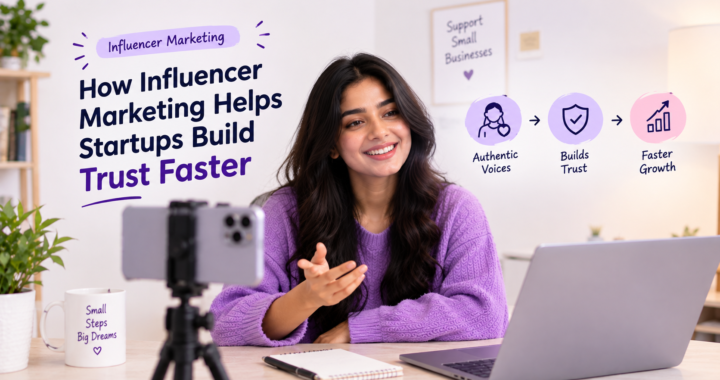
This is especially helpful for new brands that need credibility.
For example, if a local food creator recommends a new café, their followers may feel more confident visiting it.
2. Creates Authentic Content
Influencers know how to create content that feels natural to their audience.
This content may include reviews, tutorials, product demos, lifestyle videos, or personal experiences.
For brands, this content can feel more relatable than polished ads.
Influencer content can help customers see how the product works in real life.
3. Helps Reach Niche Audiences
Influencers usually build audiences around specific topics.
For example:
- Beauty creators attract skincare and makeup audiences.
- Food creators attract food lovers.
- Fitness creators attract health-conscious people.
- Finance creators attract people interested in money and investing.
- Business creators attract founders and professionals.
This helps brands reach a more relevant audience.
4. Provides Social Proof
When people see creators using or recommending a brand, it creates social proof.
Social proof means customers feel more confident because others are talking about the brand.
This is useful for small businesses, startups, D2C brands, and new products.
5. Useful for UGC and Brand Content
Influencer campaigns can also give brands useful content.
If usage rights are agreed upon, brands can reuse influencer content for:
- Social media
- Paid ads
- Website
- Product pages
- Landing pages
- Email campaigns
- Testimonials
This makes influencer marketing valuable beyond one post.
Limitations of Influencer Marketing
1. Less Control Over Content
Influencer content works best when it feels natural. That means brands should not control every word.
But this also means the final content may not look exactly like a traditional ad.
Brands need to give a clear brief while allowing creative freedom.
2. Results Can Be Harder to Predict
Two influencers with similar follower counts can produce very different results.
Performance depends on audience quality, trust, content timing, product fit, and creator style.
That is why brands should test creators before scaling.
3. Fake Followers Can Be a Risk
Some influencers may have fake followers or fake engagement.
Brands should check audience quality before collaboration.
They should review:
- Engagement quality
- Comment quality
- Audience location
- Story views
- Follower authenticity
- Past campaign performance
4. Tracking Needs Proper Setup
Influencer marketing can be tracked, but brands need proper systems.
Use:
- UTM links
- Coupon codes
- Affiliate links
- Landing pages
- Creator reports
- Website analytics
Without tracking, it becomes difficult to measure campaign performance.
Benefits of Social Media Ads
1. Better Control
Social media ads give brands more control over campaigns.
Brands can control:
- Budget
- Audience
- Location
- Creative
- Objective
- Placement
- Duration
- Landing page
- Testing
- Optimization
This makes paid ads useful for structured marketing campaigns.
2. Easy to Scale
If an ad performs well, brands can increase the budget and reach more people.
This makes social media ads easier to scale than influencer campaigns.
Influencer reach is limited by the creator’s audience. Social media ads can expand based on budget and targeting.
3. Strong Tracking and Analytics
Social media platforms provide detailed ad analytics.
Brands can track:
- Impressions
- Reach
- Clicks
- Cost per click
- Leads
- Sales
- Conversion rate
- Cost per result
- Return on ad spend
- Audience performance
- Creative performance
This makes ads useful for performance marketing.
4. Useful for Retargeting
Retargeting is one of the biggest strengths of social media ads.
Brands can show ads to people who have already:
- Visited the website
- Viewed a product
- Added to cart
- Watched a video
- Engaged with social media
- Filled a lead form
- Downloaded an app
Retargeting helps bring interested users back and can improve conversions.
5. Faster Testing
With social media ads, brands can test multiple creatives, audiences, offers, and landing pages.
For example, a brand can test:
- 5 ad creatives
- 3 audience groups
- 2 offers
- 2 landing pages
This helps identify what works faster.
Limitations of Social Media Ads
1. Ads Can Feel Promotional
Many users scroll past ads because they know the brand is directly selling to them.
If the ad creative does not feel relatable, users may ignore it.
This is why brands need strong creatives to make ads work.
2. Ad Costs Can Increase
Social media ads depend on competition, targeting, campaign objective, and creative performance.
If many brands are targeting the same audience, costs can increase.
Poor ad creative can also increase cost per result.
3. Trust May Be Lower Than Creator Recommendations
People may trust a creator’s recommendation more than a direct brand ad.
This is why social media ads can sometimes struggle in categories where trust matters, such as skincare, health, finance, parenting, education, and high-ticket products.
4. Creative Fatigue
If users see the same ad many times, they may stop responding.
This is called creative fatigue.
Brands need to keep testing new creatives to maintain ad performance.
UGC and influencer content can help solve this problem by giving brands fresh ad creatives.
Which One Is Better for Brand Awareness?
Both can work for brand awareness, but in different ways.
Influencer Marketing for Awareness
Influencer marketing can be better when you want awareness with trust.
For example, if a creator introduces your brand naturally, their audience may remember it better.
This works well for:
- New brands
- Product launches
- Local businesses
- D2C brands
- Lifestyle products
- Beauty and fashion brands
- Food brands
- Apps and startups
Social Media Ads for Awareness
Social media ads can be better when you want controlled and scalable reach.
You can define your target audience and show ads repeatedly.
This works well for:
- Large campaigns
- Brand recall
- Event promotions
- Video views
- Broad reach campaigns
- Multi-city campaigns
Better Choice
For trust-based awareness, choose influencer marketing.
For controlled mass reach, choose social media ads.
For best results, use both together.
Which One Is Better for Sales?
Sales depend on product, offer, audience, landing page, pricing, and trust.
Influencer Marketing for Sales
Influencer marketing can drive sales when the creator has a trusted audience and the product fits naturally.
It works well with:
- Coupon codes
- Product reviews
- Tutorials
- Testimonials
- Strong offers
- Affiliate links
- Limited-time deals
Social Media Ads for Sales
Social media ads can drive sales when the funnel is properly set up.
Ads work well with:
- Conversion campaigns
- Retargeting
- Product catalog ads
- Landing pages
- Offers
- A/B testing
- Lookalike audiences
Better Choice
For direct sales at scale, social media ads may be easier to optimize.
For trust-led product discovery, influencer marketing can be powerful.
For stronger sales, use influencer content in paid ads.
Which One Is Better for Small Businesses?
Small businesses often have limited budgets, so they need to choose carefully.
Influencer Marketing for Small Businesses
Influencer marketing can be very useful for small businesses because they can start with:
- Nano influencers
- Micro influencers
- Local creators
- Product gifting
- Barter collaborations
- Affiliate campaigns
- UGC creators
This is useful for local reach and trust-building.
Social Media Ads for Small Businesses
Social media ads can also help small businesses if they have:
- Clear target audience
- Good creative
- Proper landing page
- Tracking setup
- Strong offer
- Basic testing budget
Better Choice
For local trust and content, influencer marketing can be a good starting point.
For traffic, leads, and retargeting, social media ads can help.
For small businesses, a mixed approach is often better than choosing only one.
Which One Is Better for Content Creation?
Influencer marketing is usually better for content creation because creators can produce relatable content.
Brands can get:
- Product reviews
- UGC videos
- Unboxing content
- Tutorials
- Testimonials
- Lifestyle content
- Reels
- Shorts
- Product demos
Social media ads need strong creatives to perform. Influencer content can become the creative for ads.
This is why many brands now use influencer or UGC content in paid ads.
Best Strategy: Use Influencer Marketing and Social Media Ads Together
The smartest brands do not always choose one over the other.
They combine both.
Here is how:
Step 1: Work With Influencers
Collaborate with relevant creators to create awareness, trust, reviews, and UGC content.
Step 2: Identify Best-Performing Content
Check which influencer content gets strong engagement, saves, shares, comments, clicks, or sales.
Step 3: Use Creator Content in Ads
With proper usage rights, turn the best influencer content into paid ads.
Step 4: Retarget Interested Users
Run ads to people who visited your website, watched videos, engaged with your content, or clicked links.
Step 5: Scale What Works
Increase budget on creatives, creators, and audiences that perform best.
This approach gives you:
- Creator trust
- Authentic content
- Paid ad scalability
- Better retargeting
- More testing opportunities
- Stronger campaign performance
For many brands, this is the best modern marketing approach.
Influencer Marketing vs Social Media Ads Based on Goals
| Brand Goal | Better Option |
| Build trust | Influencer marketing |
| Get fast controlled reach | Social media ads |
| Create UGC content | Influencer marketing / UGC creators |
| Retarget website visitors | Social media ads |
| Product reviews | Influencer marketing |
| Scale a proven offer | Social media ads |
| Local business promotion | Local influencers + ads |
| Drive app installs | Both |
| Generate leads | Both |
| Improve brand recall | Both |
| Test multiple creatives | Social media ads |
| Build social proof | Influencer marketing |
| Improve ad creatives | Influencer/UGC content |
The better option depends on the campaign goal.
When Should Brands Choose Influencer Marketing?
Choose influencer marketing when:
- You want trust and social proof.
- You want creator-led recommendations.
- You need authentic content.
- You are launching a new product.
- You want to reach niche audiences.
- You want local awareness.
- You want UGC-style videos.
- You want people to see real product usage.
- You want to build brand credibility.
- You want to work with creators long-term.
Influencer marketing is especially useful when your product needs trust, explanation, or lifestyle fit.
When Should Brands Choose Social Media Ads?
Choose social media ads when:
- You want controlled targeting.
- You want to scale quickly.
- You have a clear offer.
- You have a good landing page.
- You want to retarget users.
- You want measurable traffic, leads, or sales.
- You want to test multiple creatives.
- You want predictable campaign structure.
- You want to run conversion campaigns.
- You have tracking properly set up.
Social media ads are especially useful when your funnel is ready and you want to scale traffic or conversions.
When Should Brands Use Both?
Use both when:
- You want trust and scale.
- You want creator content for ads.
- You want awareness plus conversions.
- You want to test influencer content as paid creatives.
- You want to retarget influencer-driven traffic.
- You want stronger full-funnel marketing.
- You want better creative variety.
- You want to reduce ad fatigue with UGC content.
For example:
A skincare brand can work with beauty creators for reviews and then use the best UGC videos in Meta ads.
A SaaS brand can work with LinkedIn creators for awareness and then retarget visitors with lead ads.
A local café can collaborate with food creators and then run ads using creator videos to nearby audiences.
This combination can be stronger than using either channel alone.
Common Mistakes Brands Should Avoid
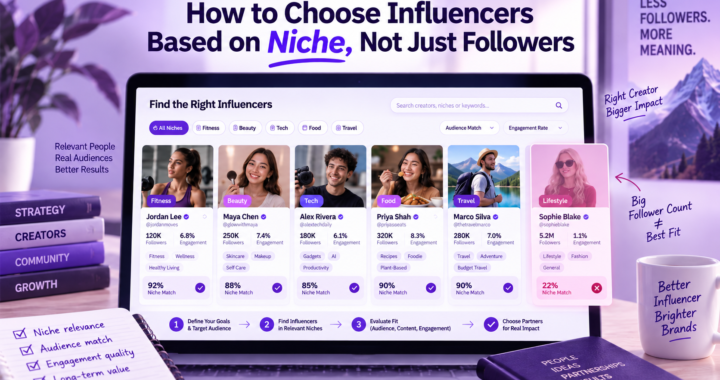
1. Choosing Influencers Only by Followers
A large follower count does not always mean real influence. Brands should check audience relevance, engagement quality, and content fit.
2. Running Ads With Weak Creatives
Paid ads cannot fix poor content. Good creative is important for ad performance.
3. Not Tracking Results
Both influencer marketing and social media ads need tracking.
Use UTM links, coupon codes, pixels, landing pages, analytics, and reports.
4. Expecting Instant Sales From Every Influencer
Influencer marketing can support awareness, trust, traffic, and sales. Not every campaign will convert immediately.
5. Not Discussing Usage Rights
If you want to use influencer content in ads, confirm paid usage rights before the campaign.
6. Not Retargeting Influencer Traffic
If an influencer sends traffic to your website, retarget those visitors with ads.
7. Comparing Both Channels Wrongly
Do not judge awareness influencer campaigns only by sales. Do not judge sales ads only by likes.
Measure based on the campaign goal.
How to Decide Which One Is Better for Your Brand
Before choosing influencer marketing or social media ads, ask:
1. What is your campaign goal?
Awareness, traffic, leads, sales, content, app installs, or trust?
2. Who is your target audience?
Where do they spend time? Whom do they trust? What type of content do they consume?
3. What is your budget?
Do you have budget for creators, ads, or both?
4. Do you need content or reach?
If you need authentic content, choose creators. If you need controlled reach, choose ads.
5. Do you have a strong landing page?
Ads work better when the website or landing page is ready.
6. Can you track results?
Use tracking links, coupon codes, pixels, and analytics.
7. Is trust important for your category?
If yes, influencer marketing can help.
8. Do you want to scale?
If yes, social media ads can help scale proven content and offers.
The best choice becomes clear when your campaign goal is clear.
How Influnets Can Help Brands With Influencer Marketing
Finding the right influencer manually can take a lot of time.
Brands need to search creators, check audience quality, compare content, message influencers, discuss pricing, manage briefs, and track results.
Influnets helps brands discover and connect with relevant creators for influencer campaigns.
For brands that want to combine influencer marketing with social media ads, Influnets can help them find creators who can produce authentic content, reviews, reels, UGC videos, and campaign assets.
Once brands have good creator content, they can also use it in their ad strategy with proper usage rights.
This makes influencer marketing and social media ads work better together.
Conclusion
Influencer marketing and social media ads are both powerful, but they are not the same.
Influencer marketing is better for trust, authenticity, social proof, niche reach, local awareness, and creator-led content.
Social media ads are better for targeting, retargeting, scaling, testing, tracking, and performance campaigns.
So, which one is better for your brand?
If your brand needs trust and relatable content, start with influencer marketing.
If your brand needs controlled traffic and conversions, use social media ads.
If your brand wants the best of both, combine influencer marketing with paid ads.
The strongest strategy is often this:
Use influencers to create trust and content.
Use ads to scale the best content and retarget interested users.
For modern brands, influencer marketing and social media ads should not compete with each other. They should work together.
FAQs
What is the difference between influencer marketing and social media ads?
Influencer marketing uses creators to promote a brand through their content and audience. Social media ads are paid advertisements run directly through platforms like Instagram, Facebook, YouTube, or LinkedIn.
Which is better: influencer marketing or social media ads?
Neither is always better. Influencer marketing is better for trust, social proof, and authentic content. Social media ads are better for targeting, retargeting, testing, and scaling. The best choice depends on your campaign goal.
Is influencer marketing cheaper than social media ads?
Influencer marketing can be affordable if brands work with nano, micro, or local creators. Social media ads can also start with small budgets, but costs depend on targeting, competition, creative quality, and campaign objective.
Can influencer marketing generate sales?
Yes, influencer marketing can generate sales when the creator’s audience is relevant, the content is trustworthy, the offer is strong, and tracking is set up with coupon codes, UTM links, or affiliate links.
Are social media ads good for small businesses?
Yes, social media ads can help small businesses generate traffic, leads, store visits, app installs, and sales if they have the right audience targeting, strong creative, and proper tracking.
Should brands use influencer content in ads?
Yes, brands can use influencer or UGC content in ads if they have proper usage rights. Creator content can make ads feel more relatable and less promotional.
Which is better for brand awareness?
Influencer marketing is strong for trust-based awareness, while social media ads are strong for controlled and scalable reach. Many brands use both for better results.
How can Influnets help brands with influencer marketing?
Influnets helps brands discover and connect with relevant creators for influencer campaigns, making creator discovery and collaboration planning more organized.