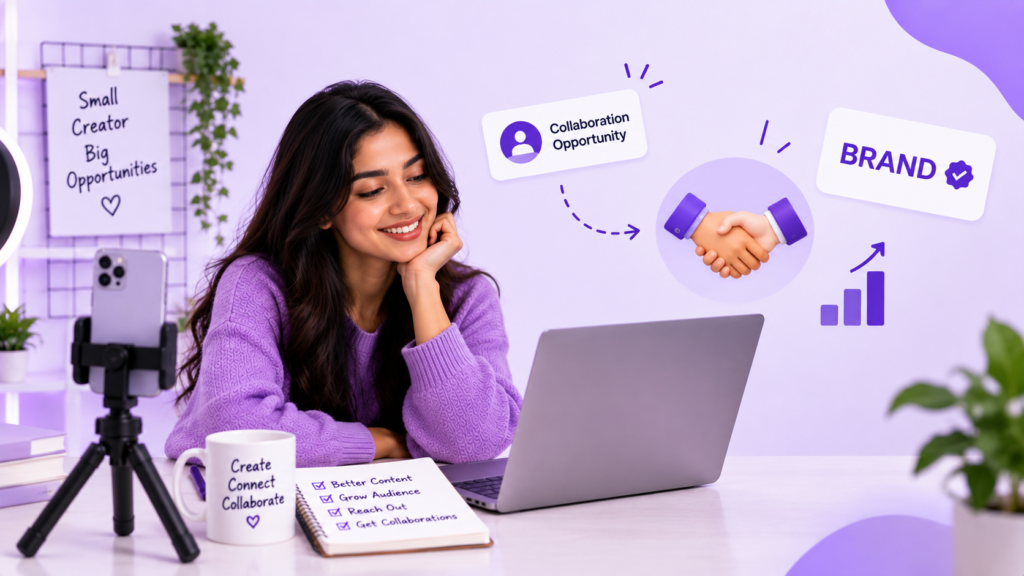
You do not need lakhs of followers to get brand collaborations.
Many small influencers believe that brands only work with big creators. But that is not true anymore. Today, many brands prefer working with nano and micro influencers because they often have a more loyal, niche, and engaged audience.
If you are a small influencer with a clear niche, good content, real engagement, and a professional approach, you can get brand collaborations even with a small follower base.
Brands do not only look at followers. They look at trust, audience quality, content style, engagement, consistency, and whether your profile matches their product.
A small creator with 5,000 genuine followers can be more valuable than a large influencer with fake followers or poor engagement.
In this blog, we will explain how small influencers can get brand collaborations, what brands look for, how to make your profile collaboration-ready, and how to pitch brands professionally.
Who Is a Small Influencer?
A small influencer is usually a creator with a small but active audience.
Small influencers are often called nano influencers or micro influencers.
Nano Influencers
Nano influencers usually have around 1,000 to 10,000 followers.
They often have a close relationship with their audience and strong personal trust.
Micro Influencers
Micro influencers usually have around 10,000 to 100,000 followers.
They have a bigger audience than nano influencers but still maintain niche relevance and good engagement.
Small influencers can create strong value for brands because their followers often see them as relatable and genuine.
Can Small Influencers Get Brand Collaborations?
Yes, small influencers can get brand collaborations.
Brands are not always looking for the biggest creator. Many brands are looking for creators who can reach a specific type of audience.
For example:
A local café may prefer a small food creator from the same city.
A skincare brand may prefer a beauty creator with a loyal niche audience.
A fitness brand may work with a small gym creator who has active followers.
A startup may work with a small LinkedIn creator who talks about business and productivity.
A fashion brand may collaborate with a small creator who creates clean outfit videos.
The main point is this:
Brands care about relevance more than just follower count.
If your audience matches the brand’s target customer, you can become valuable to that brand.
Why Brands Work With Small Influencers
Small influencers can be very useful for brands.
Here are the main reasons brands collaborate with small creators.
1. Small Influencers Feel More Authentic
Small influencers often create content that feels real and relatable.
Their audience may trust their recommendations because they do not look overly commercial or distant.
For brands, this authenticity is valuable.
2. Small Influencers Have Stronger Audience Connection
Many small influencers personally reply to comments, DMs, and questions.
This creates a closer relationship with followers.
When a creator has strong audience connection, brand recommendations can feel more natural.
3. Small Influencers Are More Niche-Focused
Small influencers often focus on specific topics like beauty, food, fashion, fitness, finance, parenting, education, travel, or local lifestyle.
This helps brands reach a targeted audience.
4. Small Influencers Are Budget-Friendly
Small influencers are usually more affordable than large influencers.
This makes them useful for startups, small businesses, D2C brands, and local businesses.
5. Small Influencers Can Create Good UGC Content
Many brands need user-generated content, product reviews, reels, testimonials, and short videos.
Small influencers can create useful content that brands can use on social media, websites, product pages, or ads, depending on usage rights.
What Brands Look for in Small Influencers
Before you try to get brand collaborations, you should understand what brands check.
Brands usually look at:
- Your niche
- Your content quality
- Your audience relevance
- Your engagement rate
- Your comment quality
- Your posting consistency
- Your follower authenticity
- Your communication style
- Your previous collaborations
- Your ability to create useful content
Brands do not want to waste money on creators who only have numbers. They want creators who can create trust, content, and results.
So, if you are a small influencer, your goal should be to make your profile look professional, clear, and brand-friendly.
How to Get Brand Collaborations as a Small Influencer
Here is a step-by-step guide for small creators.
1. Choose a Clear Niche
Your niche is the topic or category you create content around.
A clear niche helps brands understand what kind of audience you attract.
Popular creator niches include:
- Beauty
- Fashion
- Fitness
- Food
- Travel
- Technology
- Finance
- Parenting
- Education
- Lifestyle
- Gaming
- Business
- Career
- Health and wellness
- Local city content
If your content is random, brands may get confused.
For example, if you post skincare today, memes tomorrow, travel next week, and finance tips later, brands may not understand your audience.
But if your profile clearly focuses on beauty and skincare, beauty brands will find it easier to consider you.
You do not need to make your niche too narrow in the beginning, but it should be clear enough for brands.
2. Optimize Your Social Media Bio
Your bio is the first thing brands see when they visit your profile.
A strong bio should clearly explain who you are and what kind of content you create.
Your bio can include:
- Your niche
- Your location
- Your audience type
- Your email or contact option
- Collaboration mention
- Your unique value
Example bio:
“Beauty & skincare creator
Helping Indian women find simple skincare routines
Delhi | Reels | Reviews | UGC
Collab: yourmail@example.com”
Another example:
“Food creator from Mumbai
Exploring cafés, street food & local restaurants
Open for brand collaborations
Email: yourmail@example.com”
Make it easy for brands to understand your profile and contact you.
3. Create Content Consistently
Brands prefer creators who post consistently.
Consistency shows that you are serious about content creation.
You do not need to post every day, but you should have a regular content schedule.
For example:
- 3 reels per week
- 2 carousel posts per week
- Daily stories
- 1 long-form video per week
- 1 product review per week
Choose a schedule you can maintain.
If a brand visits your profile and sees that you have not posted for two months, they may not feel confident about working with you.
Consistency builds trust with both your audience and brands.
4. Improve Your Content Quality
You do not need expensive equipment to create good content.
But your content should be clear, clean, and easy to understand.
Focus on:
- Good lighting
- Clear audio
- Stable video
- Clean background
- Simple editing
- Strong hook
- Useful caption
- Good storytelling
- Clear product visibility
- Natural presentation
Brands want creators who can present their product properly.
Even if you have a small audience, good content quality can help you stand out.
Remember: brands may hire you for your content skill, not just your audience.
5. Build Real Engagement
Engagement matters more than fake numbers.
Brands check whether your audience is active and genuine.
To build real engagement:
- Reply to comments
- Ask questions in captions
- Use polls and Q&A in stories
- Create useful content
- Share honest opinions
- Start conversations
- Make content your audience can save or share
- Respond to DMs when possible
Real engagement includes meaningful comments, story replies, shares, saves, and product-related questions.
Do not buy fake followers or fake likes. It may make your profile look bigger, but brands can often identify fake engagement.
Fake growth can damage your credibility.
6. Create Sample Brand-Style Content
If you have not worked with brands yet, create sample content.
This shows brands what you can do.
For example:
If you are a beauty creator, create a sample skincare review.
If you are a food creator, create a café review or product tasting video.
If you are a fashion creator, create outfit styling content.
If you are a tech creator, create an app review or gadget demo.
If you are a fitness creator, create a supplement or workout gear review.
You do not always need a paid collaboration to show your skill. You can create content around products you already use.
This helps brands imagine how their product may look in your content.
7. Build a Simple Media Kit
A media kit is a short document that introduces you as a creator.
It helps brands understand your profile quickly.
Your media kit should include:
- Your name
- Profile link
- Niche
- Location
- Audience demographics
- Follower count
- Average reach
- Average views
- Engagement rate
- Content formats
- Past collaborations, if any
- Sample content links
- Collaboration options
- Contact details
You can create a simple one-page media kit using Canva or any design tool.
Do not make it too complicated. Keep it clean and professional.
If you do not have brand collaborations yet, include your best-performing content and audience insights.
8. Know What Collaboration Types You Can Offer
Small influencers can offer different types of collaborations.
These may include:
- Instagram Reel
- Instagram Story
- YouTube Shorts
- YouTube video integration
- Product review
- Unboxing video
- Testimonial video
- UGC video
- Product photography
- Giveaway collaboration
- Affiliate collaboration
- Event visit
- Local business review
- Blog mention
- LinkedIn post
When approaching brands, be clear about what you can provide.
For example:
“I can create 1 reel and 3 stories for your product.”
“I can create UGC videos for your brand to use in ads.”
“I can visit your café and create a local food review reel.”
“I can create a product demo video with usage rights.”
Clarity makes you look professional.
9. Start With Small and Relevant Brands
Do not start by messaging only big national brands.
Start with small businesses, local brands, startups, D2C brands, and niche businesses.
They are often more open to working with small creators.
For example:
- Local cafés
- Clothing stores
- Skincare startups
- Fitness brands
- Handmade product sellers
- Small apps
- Local salons
- Gyms
- Coaching institutes
- Restaurants
- Homegrown brands
- Online stores
Make a list of brands that match your niche and audience.
If you are a small food creator, pitch local restaurants and food products. If you are a fitness creator, pitch gyms, supplements, fitness apps, and activewear brands.
Relevance matters.
10. Pitch Brands Professionally
When messaging a brand, do not just write:
“Collab?”
That does not look professional.
Your pitch should be short, clear, and useful for the brand.
A good pitch should include:
- Who you are
- What content you create
- Why you like the brand
- How you can help
- What collaboration idea you have
- Your profile or media kit link
- Contact details
Example pitch:
“Hi, I’m Riya, a Delhi-based skincare creator. I create simple skincare routine and product review content for Indian women. I came across your brand and feel your moisturizer would fit well with my audience. I’d love to create a short reel showing how it works in a daily skincare routine. I can also share my media kit if you’re open to collaborations.”
This is much better than asking directly for free products or paid work.
11. Personalize Every Brand Message
Do not send the same copy-paste message to every brand.
Brands can easily notice generic pitches.
Before messaging a brand, check:
- What products they sell
- Who their target audience is
- What type of content they post
- Whether they already work with creators
- Which product fits your audience
- How your content can help them
Then personalize your pitch.
For example:
“I saw your new hair serum launch and I think it would fit well with my haircare routine content.”
This shows that you actually researched the brand.
12. Be Open to Barter Collaborations in the Beginning
When you are starting out, you may not get paid collaborations immediately.
Some brands may offer product gifting or barter collaborations first.
This can still be useful if:
- The product is relevant to your niche
- You genuinely like the brand
- You can create good portfolio content
- The collaboration gives you experience
- The brand may work with you again later
But do not accept every free product.
Accept only those collaborations that match your niche, audience, and content quality.
Your profile should not become a place for random promotions.
13. Charge Professionally When You Are Ready
Once you have consistent content, real engagement, and good examples, you can start charging for collaborations.
Your pricing can depend on:
- Follower count
- Average reach
- Average views
- Engagement quality
- Content format
- Niche
- Content quality
- Usage rights
- Posting requirement
- Editing effort
- Timeline
Do not undervalue yourself, but also be realistic.
If a brand asks for content usage rights, paid ad rights, or multiple revisions, you can charge separately.
As a creator, you are not only giving a post. You are giving content, audience access, creativity, and trust.
14. Understand Usage Rights
Usage rights are very important.
If a brand wants to use your content on their own page, website, paid ads, or marketing material, discuss it clearly.
Ask:
- Where will the content be used?
- Will it be used in paid ads?
- For how long can the brand use it?
- Can the brand edit the content?
- Will your face or name be used?
- Is usage included in the fee?
- Is there an extra charge for ad usage?
Never assume. Clarify everything before creating content.
This protects both you and the brand.
15. Deliver Work on Time
Professionalism is one of the easiest ways to get repeat collaborations.
Brands remember creators who are easy to work with.
To look professional:
- Reply on time
- Understand the brief
- Ask questions if needed
- Follow deadlines
- Share drafts if required
- Post at the agreed time
- Use correct tags and links
- Share performance insights
- Be polite and clear
Even if you are a small creator, professional behavior can make brands want to work with you again.
16. Share Campaign Results With Brands
After posting the content, share performance results with the brand.
You can share:
- Reach
- Impressions
- Views
- Likes
- Comments
- Saves
- Shares
- Story views
- Link clicks
- Audience response
- Screenshots of insights
This helps the brand understand campaign performance.
It also shows that you are serious and professional.
If the campaign performed well, you can pitch a long-term collaboration.
For example:
“The reel reached 18,000 people and received many product-related comments. I’d love to explore a monthly collaboration if you’re open to it.”
How to Make Your Profile Brand-Friendly
If you want brands to collaborate with you, your profile should look ready for partnerships.
Here are some simple tips:
- Keep your bio clear.
- Mention your niche.
- Add your email.
- Use a professional profile photo.
- Pin your best content.
- Keep your highlights organized.
- Share audience insights when possible.
- Avoid too many random promotions.
- Keep your content quality consistent.
- Show your personality and expertise.
A brand should understand your value within a few seconds of visiting your profile.
Best Platforms to Get Brand Collaborations
Small influencers can find brand collaborations through different channels.
1. Influencer Marketplaces
Platforms like Influnets can help creators connect with brands looking for influencers and UGC creators.
This can save time compared to manually searching for brands.
2. Instagram
Many brands are active on Instagram. You can engage with their posts, reply to stories, and send professional collaboration messages.
3. LinkedIn
LinkedIn is useful for creators in business, SaaS, finance, career, education, marketing, and professional niches.
4. Email Outreach
Email is still a professional way to contact brands, especially for serious collaborations.
5. Local Business Outreach
If you create local content, reach out to restaurants, cafés, salons, gyms, stores, and events in your city.
6. Creator Communities
Join creator groups, communities, and networks where brands post collaboration opportunities.
Common Mistakes Small Influencers Should Avoid
1. Buying Fake Followers
Fake followers may increase numbers, but they reduce trust. Brands can often detect fake engagement.
2. Messaging “Collab?” Only
Brands receive many such messages. Send a proper pitch instead.
3. Promoting Random Products
Too many unrelated promotions can confuse your audience and reduce trust.
4. Not Having Contact Details
If your profile has no email or contact option, brands may move to another creator.
5. Ignoring Content Quality
Good content can help small influencers stand out even with fewer followers.
6. Not Sharing Insights
Brands need data to make decisions. Be ready to share basic audience and performance insights.
7. Not Understanding Brand Goals
Do not create content only for yourself. Understand what the brand wants from the campaign.
8. Not Clarifying Payment and Usage Rights
Always clarify deliverables, payment, posting, usage rights, and deadlines before starting.
Brand Collaboration Pitch Template for Small Influencers
Here is a simple pitch you can use.
Instagram DM or Email Pitch
Hi [Brand Name],
I’m [Your Name], a [your niche] creator based in [your location]. I create content around [your content topics] for an audience interested in [audience interest].
I came across your brand and really liked [specific product/campaign/reason]. I feel your product would connect well with my audience because [reason].
I’d love to collaborate and create [content idea, such as 1 reel + 3 stories / product review / UGC video / unboxing video].
You can check my profile here: [profile link]
I can also share my media kit and audience insights if you’re open to exploring a collaboration.
Thank you,
[Your Name]
Example Pitch for a Beauty Creator
Hi [Brand Name],
I’m Riya, a skincare and beauty creator from Delhi. I create simple skincare routine and product review content for Indian women who are looking for easy and affordable skincare options.
I saw your new moisturizer and feel it would fit well with my daily skincare content. I’d love to create a short reel showing how it works in a morning routine, along with 2–3 stories sharing my experience.
You can check my profile here: [profile link]
I can also share my media kit and audience insights if you’re open to collaboration.
Thank you,
Riya
How Influnets Can Help Small Influencers Get Brand Collaborations
Finding brand collaborations manually can take time.
Small influencers often have to search for brands, send messages, follow up, negotiate deliverables, and explain their value again and again.
Influnets helps creators and brands connect more easily.
As a creator, you can use Influnets to make your profile more discoverable to brands looking for influencers and UGC creators.
For brands, Influnets helps them find relevant creators based on campaign needs.
For small influencers, this can create better opportunities to get noticed by businesses that are actively looking for creator collaborations.
If you are serious about getting brand collaborations, focus on improving your profile, creating quality content, and making it easy for brands to understand your value.
Conclusion
Small influencers can get brand collaborations if they build the right profile, create consistent content, and approach brands professionally.
You do not need a huge follower count to start. You need a clear niche, real engagement, good content quality, audience trust, and a professional communication style.
Brands are looking for creators who can help them reach the right audience, create authentic content, and build trust.
Start by optimizing your bio, creating sample brand-style content, building a simple media kit, pitching relevant brands, and delivering your work professionally.
Avoid fake followers, random promotions, and unclear communication.
As a small influencer, your biggest strength is authenticity.
Use it well.
If your content is genuine, your audience is real, and your profile is clear, brand collaborations can become a strong opportunity for your creator journey.
FAQs
Can small influencers get brand collaborations?
Yes, small influencers can get brand collaborations if they have a clear niche, real engagement, good content quality, and an audience that matches the brand’s target customers.
How many followers do I need to get brand collaborations?
You do not need lakhs of followers. Even creators with 1,000 to 10,000 followers can get collaborations if their audience is genuine, engaged, and relevant to the brand.
How do I approach brands as a small influencer?
Approach brands with a professional pitch. Introduce yourself, mention your niche, explain why the brand fits your audience, suggest a content idea, and share your profile or media kit.
What do brands look for in small influencers?
Brands look for audience relevance, engagement quality, content style, niche clarity, follower authenticity, professionalism, and the creator’s ability to produce useful content.
Should small influencers accept barter collaborations?
Small influencers can accept barter collaborations in the beginning if the product is relevant, useful, and aligned with their niche. However, they should avoid promoting random products only for free items.
How can I make my profile ready for brand collaborations?
Make your profile brand-friendly by adding a clear bio, niche, location, contact email, best content, organized highlights, consistent posting, and real audience engagement.
Do I need a media kit as a small influencer?
Yes, a simple media kit can help you look professional. It should include your niche, audience insights, follower count, average reach, engagement rate, content formats, sample work, and contact details.
How can Influnets help small influencers?
Influnets helps creators and brands connect more easily, making it easier for small influencers to become discoverable to brands looking for relevant creators and UGC partners.