Influencer marketing is no longer just about likes, followers, and visibility. Brands today want to know one clear thing:
Is this influencer campaign giving us real business value?
That is where influencer marketing ROI comes in.
ROI stands for Return on Investment. In simple words, it tells you whether the money, time, and effort you spent on an influencer campaign gave you a good return or not.
Many brands run influencer campaigns but do not track results properly. They pay creators, posts go live, they get some likes and comments, and then they move on. But without proper measurement, brands cannot know which influencer worked, which content performed best, and whether the campaign was actually profitable.
To measure influencer marketing ROI, brands need to define campaign goals, track the right metrics, use proper tracking links or coupon codes, calculate campaign cost, and compare results with the investment.
In this blog, we will explain how brands can measure influencer marketing ROI in a simple and practical way.
What Is Influencer Marketing ROI?
Influencer marketing ROI means the return a brand gets from an influencer campaign compared to what it spent.
The return can be different for every campaign.
For some brands, ROI means direct sales.
For some brands, ROI means leads.
For some brands, ROI means website traffic.
For some brands, ROI means app downloads.
For some brands, ROI means brand awareness.
For some brands, ROI means user-generated content.
This is why influencer marketing ROI is not only about revenue. It depends on your campaign goal.
For example, if your campaign goal is sales, you should measure revenue, orders, coupon code usage, and conversion rate.
If your goal is awareness, you should measure reach, impressions, video views, engagement, and brand mentions.
If your goal is leads, you should measure form submissions, demo requests, inquiries, calls, or signups.
The first rule of measuring influencer marketing ROI is simple:
Define what return means for your campaign before the campaign starts.
Why Measuring Influencer Marketing ROI Is Important
Measuring influencer marketing ROI helps brands make better marketing decisions.
Without ROI tracking, brands may depend only on visible numbers like followers, likes, and comments. But these numbers do not always show real business impact.
Here is why ROI measurement matters.
1. It Helps You Understand Campaign Performance
ROI measurement tells you whether the campaign achieved its goal or not.
You can understand:
- Which influencer performed well
- Which content format worked best
- Which platform gave better results
- Which audience responded better
- Whether the campaign was worth the budget
This helps you improve future campaigns.
2. It Helps You Avoid Wasting Budget
Not every influencer will give the same result.
Some creators may bring strong engagement but low sales. Some may bring traffic but no conversions. Some may create high-quality content that can be reused later.
When you measure ROI properly, you can stop spending on creators who do not perform and invest more in creators who bring real value.
3. It Helps You Prove Marketing Value
Brands, founders, and marketing teams often need to justify marketing spend.
ROI data helps show that influencer marketing is not just a branding activity. It can support awareness, traffic, leads, sales, and long-term customer trust.
4. It Helps You Build Better Influencer Relationships
When you know which influencers perform well, you can build long-term partnerships with them.
Instead of doing random one-time collaborations, brands can create repeat campaigns with creators who understand the product and deliver results.
Influencer Marketing ROI Formula
The basic formula for influencer marketing ROI is:
ROI = (Revenue Generated – Campaign Cost) / Campaign Cost × 100
For example:
If you spent ₹50,000 on an influencer campaign and generated ₹1,50,000 in sales, your ROI would be:
ROI = (₹1,50,000 – ₹50,000) / ₹50,000 × 100
ROI = 200%
This means you earned 2 times more than your campaign cost as profit return.
However, this formula works best when the campaign goal is direct revenue.
For awareness, content creation, traffic, or leads, ROI may need to be measured differently.
Step-by-Step Guide to Measure Influencer Marketing ROI
1. Define Your Campaign Goal
Before measuring ROI, first decide what your campaign is supposed to achieve.
Common influencer marketing goals include:
- Brand awareness
- Product launch
- Website traffic
- Lead generation
- Sales
- App downloads
- Social media engagement
- Store visits
- Event registrations
- User-generated content
- Brand trust
- Community growth
Your goal will decide which metrics matter.
For example:
If your goal is brand awareness, do not judge the campaign only by sales.
If your goal is sales, do not judge it only by likes.
If your goal is leads, track inquiries, forms, calls, and signups.
If your goal is UGC, measure content quality and reuse value.
A campaign without a clear goal cannot have clear ROI.
2. Set Clear KPIs Before the Campaign Starts
KPIs are Key Performance Indicators. These are the numbers you will use to measure success.
Different goals need different KPIs.
For Brand Awareness
Track:
- Reach
- Impressions
- Video views
- Profile visits
- Brand mentions
- Follower growth
- Share of voice
For Engagement
Track:
- Likes
- Comments
- Shares
- Saves
- Story replies
- Poll responses
- Engagement rate
For Website Traffic
Track:
- Link clicks
- Website sessions
- Landing page visits
- Bounce rate
- Time on page
- UTM traffic source
For Lead Generation
Track:
- Form submissions
- Demo requests
- Call inquiries
- WhatsApp inquiries
- Email signups
- Cost per lead
For Sales
Track:
- Orders
- Revenue
- Coupon code usage
- Conversion rate
- Average order value
- Customer acquisition cost
- Return on ad spend, if paid boosting is used
For App Downloads
Track:
- App installs
- Cost per install
- Signup rate
- Active users
- Trial starts
- Paid conversions
For UGC Content
Track:
- Number of content assets
- Content quality
- Reuse rights
- Ad performance of creator content
- Cost per content piece
- Engagement on UGC posts
Setting KPIs before the campaign helps avoid confusion later.
3. Calculate the Total Campaign Cost
To measure ROI properly, you need to calculate the full cost of the campaign.
Campaign cost may include:
- Influencer fee
- Product sample cost
- Shipping cost
- Agency fee
- Platform fee
- Content production cost
- Paid boosting cost
- Discount or offer cost
- Internal team time
- Tracking tool cost
Many brands only count the influencer fee, but that gives an incomplete picture.
For example, if you paid an influencer ₹30,000 but also spent ₹10,000 on product samples, ₹5,000 on shipping, and ₹15,000 on paid boosting, your total campaign cost is ₹60,000.
ROI should be calculated using the total campaign cost, not just the creator fee.
4. Use UTM Links
UTM links are one of the easiest ways to track influencer campaign traffic.
A UTM link is a special tracking link that shows where your website visitors came from.
For example, you can create a separate UTM link for each influencer.
This helps you track:
- Website visits from each creator
- Which platform drove traffic
- Which campaign brought clicks
- Which content format performed better
- Which influencer brought conversions
For example:
Influencer A may bring 5,000 clicks but only 20 sales.
Influencer B may bring 1,000 clicks but 80 sales.
Without UTM tracking, you may think Influencer A performed better. But with proper tracking, you can see that Influencer B brought better quality traffic.
5. Use Unique Coupon Codes
Coupon codes are useful for tracking influencer-driven sales.
Give each influencer a unique code.
For example:
- RIA10
- AMAN15
- FITNESS20
- INFLUNETS10
This helps you track how many people purchased because of a specific influencer.
Coupon codes are especially useful for:
- D2C brands
- E-commerce brands
- Food brands
- Beauty brands
- Fashion brands
- Fitness brands
- Online courses
- Digital products
But remember, coupon codes may not track every sale. Some users may see the influencer content but buy later without using the code.
So coupon codes are useful, but they should be combined with other tracking methods.
6. Track Landing Page Performance
If you are running an influencer campaign, send traffic to a dedicated landing page when possible.
A landing page helps you measure campaign performance more clearly.
Track:
- Page visits
- Conversion rate
- Form submissions
- Add to cart
- Purchases
- Time on page
- Scroll depth
- Bounce rate
- Traffic source
A dedicated landing page also helps you customize the message for the influencer’s audience.
For example, if a fitness influencer is promoting your product, your landing page can mention fitness-related benefits, use relevant visuals, and show a special offer.
This can improve conversions.
7. Track Engagement Quality, Not Just Engagement Quantity
Engagement is important, but not all engagement has the same value.
A post with 5,000 likes but no real comments may not be as useful as a post with 500 likes and many product-related questions.
Brands should check:
- Are comments meaningful?
- Are people asking about price?
- Are people asking where to buy?
- Are people tagging friends?
- Are people saving the post?
- Are people sharing the post?
- Are people replying to stories?
- Are followers discussing the product?
Real engagement shows interest. Fake or shallow engagement only shows numbers.
For ROI measurement, quality matters more than vanity metrics.
8. Measure Cost Per Result
Cost per result helps you understand how efficiently your campaign performed.
Depending on your goal, you can calculate:
Cost Per Reach
Campaign Cost / Total Reach
Cost Per Engagement
Campaign Cost / Total Engagements
Cost Per Click
Campaign Cost / Total Link Clicks
Cost Per Lead
Campaign Cost / Total Leads
Cost Per Sale
Campaign Cost / Total Sales
Cost Per Install
Campaign Cost / Total App Installs
For example:
If your campaign cost is ₹40,000 and you received 800 leads:
Cost Per Lead = ₹40,000 / 800
Cost Per Lead = ₹50
This means each lead cost you ₹50.
Cost per result helps you compare different influencers and campaigns more clearly.
9. Compare Influencer Performance
After the campaign ends, compare each influencer’s performance.
Create a simple table with:
- Influencer name
- Platform
- Content format
- Fee
- Reach
- Engagement
- Link clicks
- Leads
- Sales
- Revenue
- Cost per result
- ROI
This helps you identify top-performing creators.
For example:
Influencer A may bring more reach.
Influencer B may bring more sales.
Influencer C may bring better content.
Influencer D may bring low traffic but high-quality leads.
This comparison helps brands plan future campaigns better.
10. Track Assisted Conversions
Not every customer buys immediately after seeing an influencer post.
Some people may:
- See the influencer’s reel
- Visit your Instagram profile
- Search your brand on Google
- Visit your website later
- Compare reviews
- Buy after a few days
This is called assisted influence.
Influencer marketing often supports the customer journey, even if it does not get the final direct conversion.
Brands should track:
- Branded search increase
- Direct website traffic
- Social media follower growth
- Retargeting audience growth
- Website visits after campaign
- Delayed conversions
- Repeat visits
This helps brands understand the full impact of influencer marketing.
How to Measure ROI for Different Influencer Campaign Goals
ROI for Brand Awareness Campaigns
If your goal is awareness, measure:
- Reach
- Impressions
- Video views
- Brand mentions
- Follower growth
- Profile visits
- Search volume increase
Awareness ROI is not always immediate revenue. It shows how many relevant people discovered your brand.
ROI for Engagement Campaigns
If your goal is engagement, measure:
- Likes
- Comments
- Saves
- Shares
- Story replies
- Poll responses
- Engagement rate
But also check engagement quality. Meaningful comments and shares are more valuable than passive likes.
ROI for Lead Generation Campaigns
If your goal is leads, measure:
- Form submissions
- Demo bookings
- WhatsApp messages
- Phone calls
- Email signups
- Cost per lead
- Lead quality
Lead quality is important. A campaign with fewer but better leads can be more valuable than a campaign with many low-quality leads.
ROI for Sales Campaigns
If your goal is sales, measure:
- Orders
- Revenue
- Coupon code usage
- Conversion rate
- Average order value
- Customer acquisition cost
- Repeat purchases
Sales ROI is the easiest to calculate when tracking is set up properly.
ROI for UGC Campaigns
If your goal is content creation, measure:
- Number of usable content pieces
- Cost per content asset
- Content quality
- Content reuse rights
- Ad performance of creator content
- Engagement on reposted content
UGC ROI can be strong because brands can reuse creator content in ads, websites, social media, and product pages.
Example of Influencer Marketing ROI Calculation
Let’s understand with a simple example.
A skincare brand works with 5 micro influencers.
Campaign cost:
- Influencer fees: ₹80,000
- Product samples: ₹10,000
- Shipping: ₹5,000
- Paid boosting: ₹25,000
Total campaign cost = ₹1,20,000
Campaign results:
- Website visits: 8,000
- Leads: 600
- Orders: 220
- Revenue: ₹3,00,000
ROI calculation:
ROI = (Revenue Generated – Campaign Cost) / Campaign Cost × 100
ROI = (₹3,00,000 – ₹1,20,000) / ₹1,20,000 × 100
ROI = 150%
This means the campaign generated a 150% return on investment.
But the brand should also check:
- Which influencer brought the most sales?
- Which influencer brought the best traffic?
- Which content format worked best?
- Which audience responded better?
- Which creator should be used again?
ROI is not only a final number. It is also a learning tool.
Common Mistakes Brands Make While Measuring Influencer ROI
1. Measuring Only Likes and Comments
Likes and comments are useful, but they do not always show business results.
Brands should also track clicks, leads, sales, saves, shares, and conversions.
2. Not Setting Goals Before the Campaign
If you do not define your goal, you cannot measure ROI properly.
Every campaign should start with a clear objective.
3. Not Using Tracking Links or Coupon Codes
Without tracking links or coupon codes, it becomes difficult to know which influencer delivered results.
4. Ignoring Total Campaign Cost
Some brands only count influencer fees and ignore product, shipping, platform, agency, and boosting costs.
This can make ROI look better than it actually is.
5. Comparing Different Campaign Goals Incorrectly
An awareness campaign should not be judged like a sales campaign. A UGC campaign should not be judged only by revenue.
Measure the campaign based on its original goal.
6. Not Checking Lead or Sale Quality
More leads do not always mean better ROI. Brands should check whether leads are relevant and likely to convert.
7. Ignoring Long-Term Impact
Influencer marketing can create long-term value through brand recall, content assets, search interest, retargeting audiences, and repeat exposure.
Best Influencer Marketing Metrics Brands Should Track
Here are the most useful metrics for measuring influencer marketing ROI:
- Reach
- Impressions
- Video views
- Engagement rate
- Saves
- Shares
- Comments
- Story views
- Link clicks
- Website traffic
- Leads
- Sales
- Revenue
- Conversion rate
- Coupon code usage
- Cost per click
- Cost per lead
- Cost per sale
- Customer acquisition cost
- Return on investment
- Return on ad spend, if boosting is used
Brands do not need to track every metric for every campaign. Choose metrics based on your campaign goal.
How to Improve Influencer Marketing ROI
Measuring ROI is important, but improving ROI is even more important.
Here are some ways brands can improve campaign performance:
1. Choose Relevant Influencers
Work with creators whose audience matches your target customers.
2. Give a Clear Brief
Explain your campaign goal, message, deliverables, timeline, and expectations clearly.
3. Allow Creative Freedom
Influencers understand their audience. Give direction, but do not make the content sound too scripted.
4. Use Strong Offers
Discounts, trials, limited-time deals, bundles, and special codes can improve conversions.
5. Track Everything
Use UTM links, coupon codes, landing pages, and analytics tools.
6. Test Multiple Creators
Do not depend on only one influencer. Test different creators and scale the ones that perform well.
7. Reuse Good Content
If usage rights are included, reuse high-performing creator content in ads, social media, landing pages, and product pages.
8. Build Long-Term Partnerships
Repeated collaborations can build stronger trust than one-time posts.
How Influnets Can Help Brands Measure Influencer Marketing Better
Finding influencers is only one part of the process. Brands also need to work with the right creators and understand which collaborations are worth repeating.
Influnets helps brands discover and connect with relevant creators for influencer campaigns.
With a more organized influencer discovery process, brands can compare creators better, plan campaigns more clearly, and focus on partnerships that match their goals.
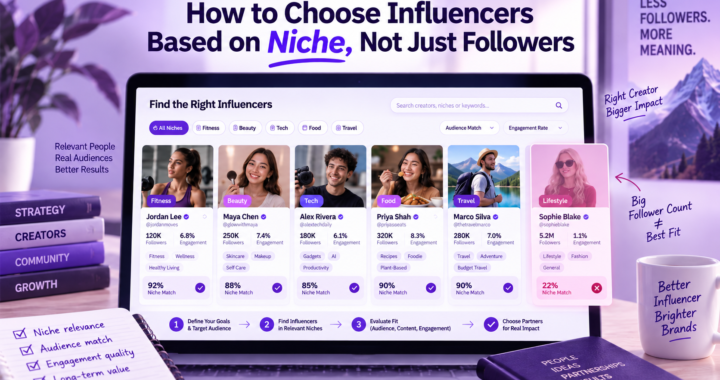
Instead of choosing influencers only by follower count, brands can focus on audience relevance, campaign fit, content quality, and measurable results.
For brands, influencer marketing ROI improves when the right creator meets the right campaign goal.
Conclusion
Measuring influencer marketing ROI is essential for brands that want real results from creator collaborations.
To measure ROI properly, brands should first define their campaign goal, set clear KPIs, calculate total campaign cost, use tracking links, assign coupon codes, monitor landing page performance, and compare influencer results.
Influencer marketing ROI is not always about direct sales. It can also include awareness, engagement, leads, app downloads, content assets, brand trust, and long-term customer interest.
The key is to measure the right metric for the right goal.
A successful influencer campaign is not just the one that gets views. It is the one that creates value for the brand.
In 2026 and beyond, brands should treat influencer marketing as a measurable growth channel, not just a social media activity.
When you track ROI properly, you can understand what works, improve future campaigns, and build stronger creator partnerships.
FAQs
What is influencer marketing ROI?
Influencer marketing ROI is the return a brand gets from an influencer campaign compared to the money, time, and resources spent on it. It can include sales, leads, traffic, awareness, engagement, app downloads, or content value.
How do you calculate influencer marketing ROI?
The basic formula is: ROI = (Revenue Generated – Campaign Cost) / Campaign Cost × 100. However, if the campaign goal is not sales, brands should measure ROI using relevant metrics like leads, reach, engagement, or content value.
What metrics should brands track for influencer marketing ROI?
Brands should track reach, impressions, engagement, saves, shares, link clicks, website visits, leads, sales, revenue, coupon code usage, conversion rate, and cost per result based on the campaign goal.
How can brands track influencer sales?
Brands can track influencer sales using unique coupon codes, UTM links, affiliate links, dedicated landing pages, platform analytics, and website conversion tracking.
Is influencer marketing ROI only about sales?
No, influencer marketing ROI is not only about sales. It can also include brand awareness, engagement, website traffic, leads, app downloads, user-generated content, brand trust, and long-term customer interest.
What is a good ROI for influencer marketing?
A good ROI depends on your campaign goal, industry, product price, profit margin, and campaign cost. For sales campaigns, brands usually compare revenue generated against total campaign cost. For awareness campaigns, brands measure reach, impressions, engagement, and brand lift.
Why do brands fail to measure influencer ROI?
Brands often fail to measure influencer ROI because they do not set clear goals, do not use tracking links, ignore total campaign cost, focus only on likes, or do not ask influencers for performance reports.
How can Influnets help with influencer marketing campaigns?
Influnets helps brands discover and connect with relevant creators, making influencer selection more organized and campaign planning easier for brands.