Working with influencers can be a powerful way for brands to build awareness, trust, engagement, and sales.
But influencer marketing only works when you choose the right creator.
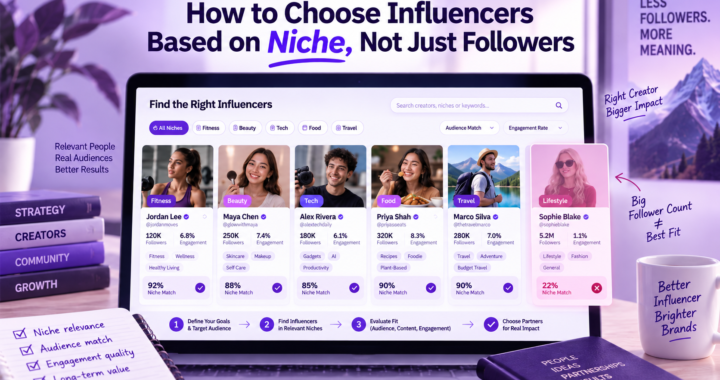
Many brands make the mistake of selecting influencers only because they have a large number of followers. But followers alone do not guarantee results. A creator may have 5 lakh followers, but if their audience is not relevant to your brand, your campaign may not perform well.
Before working with any influencer, brands should check a few important things carefully. This helps avoid fake followers, poor content quality, weak engagement, wrong audience targeting, and wasted marketing budget.
In this blog, we will discuss 10 things brands should check before working with an influencer.
Why Brands Should Check Influencers Carefully
Influencer marketing is not just about paying someone to post your product.
When an influencer promotes your brand, they are representing your business in front of their audience. Their content, communication style, audience quality, and public image can directly affect how people see your brand.
If you choose the right influencer, your brand can get:
- Better awareness
- More trust
- Relevant reach
- Higher engagement
- Quality content
- Better leads
- Stronger campaign results
But if you choose the wrong influencer, your brand may face:
- Fake engagement
- Irrelevant audience
- Poor content quality
- Low response
- Wasted budget
- Brand image risk
- No measurable results
That is why brands should follow a proper influencer evaluation checklist before starting any collaboration.
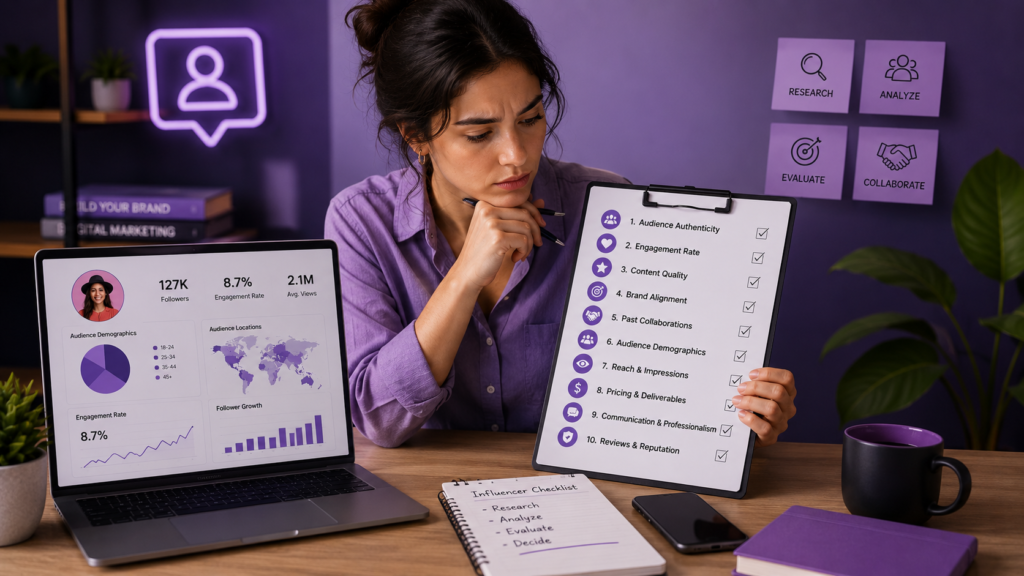
10 Things Brands Should Check Before Working With an Influencer
1. Audience Relevance
The first thing brands should check is audience relevance.
An influencer may have a large audience, but the real question is:
Are their followers your potential customers?
For example, if you are a skincare brand, you should work with creators whose audience is interested in beauty, skincare, self-care, wellness, or lifestyle. If you are a SaaS brand, you may need creators followed by founders, business owners, marketers, or professionals.
Before selecting an influencer, check:
- Audience age group
- Audience location
- Audience interests
- Audience language
- Audience gender split, if relevant
- Audience buying behavior
- Audience pain points
If your target customers are in India, but most of the influencer’s audience is outside India, the campaign may not give useful results.
Audience relevance is more important than follower count.
A creator with 20,000 relevant followers can be better than a creator with 2 lakh irrelevant followers.
2. Engagement Quality
Engagement shows how actively the audience responds to the influencer’s content.
But brands should not only check the number of likes and comments. They should check the quality of engagement.
Look at the influencer’s recent posts and ask:
- Are comments genuine?
- Are people asking questions?
- Are comments related to the content?
- Are followers sharing personal opinions?
- Does the creator reply to comments?
- Are the same accounts commenting again and again?
- Are there too many generic comments?
Generic comments like “Nice,” “Great,” “Amazing,” “Super,” or only emojis may not always show strong engagement.
Good engagement looks more natural. It includes real questions, opinions, product-related discussions, audience experiences, and meaningful reactions.
For brands, quality engagement is more valuable than fake-looking numbers.
3. Fake Followers and Fake Engagement
Fake followers are one of the biggest problems in influencer marketing.
Some influencers may have purchased followers, fake likes, bot comments, or artificial engagement. At first glance, their profile may look popular, but the audience may not be real.
Brands should look for warning signs like:
- Sudden increase in followers
- Very low likes compared to follower count
- Very low views compared to follower count
- Too many random comments
- Comments from suspicious accounts
- Followers from unrelated countries
- Repeated emoji comments
- High followers but poor story views
- No real audience interaction
Fake followers can waste your marketing budget because fake accounts do not buy products, visit websites, download apps, or become customers.
Before working with an influencer, always check whether their audience looks real and active.
4. Content Quality
The influencer’s content quality directly affects how your brand will be presented.
Before collaboration, review their content carefully.
Check:
- Video quality
- Audio clarity
- Lighting
- Editing style
- Caption writing
- Storytelling ability
- Product explanation skills
- Creativity
- Consistency
- Visual appeal
- Overall presentation
A creator may have a good audience, but if their content quality is weak, your product may not be presented properly.
Different brands need different types of content.
For example:
A premium beauty brand may need clean visuals and aesthetic content.
A tech brand may need detailed explanation and screen recording.
A food brand may need appetizing visuals and natural reactions.
A B2B brand may need educational and professional content.
The influencer’s content style should match your brand positioning.
5. Brand Fit
Brand fit means the influencer’s personality, content, tone, values, and image should match your brand.
Before working with any influencer, ask:
Does this creator feel right for our brand?
For example, a family-focused brand should work with creators who have a clean, trustworthy, and family-friendly image. A finance brand should choose creators who sound responsible and credible. A youth fashion brand may need creators with a trendy and stylish personality.
Check these points:
- Does the influencer’s tone match your brand?
- Is their content suitable for your audience?
- Have they posted anything controversial?
- Do they promote too many unrelated products?
- Would your customers trust this creator?
- Does their personal brand match your brand image?
Remember, when an influencer promotes you, your brand becomes associated with them.
So, brand fit is not optional. It is important.
6. Previous Brand Collaborations
Past collaborations can tell you how the influencer works with brands.
Check their previous paid campaigns, product reviews, sponsored posts, reels, YouTube integrations, or stories.
Look for:
- How naturally they promoted the brand
- Whether the content looked forced or genuine
- Audience response on sponsored content
- Quality of product explanation
- Types of brands they worked with
- Frequency of paid promotions
- Whether they worked with competitors
- Whether they clearly disclosed collaborations
If an influencer promotes too many unrelated brands every week, their audience may not take brand recommendations seriously.
Good influencers usually choose collaborations that fit their niche and audience.
Past work can help you understand whether the influencer can handle your campaign professionally.
7. Audience Location
Audience location is very important, especially for local, regional, or country-specific brands.
For example, if your brand sells only in India, you need an influencer whose audience is mostly from India. If you run a café in Mumbai, you need creators followed by people in Mumbai or nearby areas.
A mismatch in audience location can lead to poor campaign results.
Before finalizing an influencer, check:
- Top countries
- Top cities
- Local audience percentage
- Language of the audience
- Regional relevance
For local businesses, audience location can be more important than follower count.
A local food creator with 8,000 followers in your city may perform better than a national creator with 2 lakh followers from mixed locations.
8. Pricing and Deliverables
Before starting a collaboration, brands should clearly understand the influencer’s pricing and deliverables.
Do not start a campaign with unclear expectations.
Discuss:
- Number of posts
- Number of reels
- Number of stories
- YouTube video integration length
- Content format
- Posting date
- Revision process
- Usage rights
- Payment terms
- Content approval process
- Reporting after posting
For example, if an influencer says they will create one reel, confirm whether the package includes stories, link sharing, caption, brand tag, hashtags, and analytics report.
Also clarify whether your brand can reuse the content for ads, website, social media, or other marketing channels.
This is important because content usage rights are not always automatically included.
Clear pricing and deliverables help avoid confusion later.
9. Professionalism and Communication
A good influencer should not only create good content. They should also communicate professionally.
During the discussion stage, observe:
- Do they reply on time?
- Do they understand the campaign brief?
- Do they ask relevant questions?
- Do they share clear pricing?
- Do they explain deliverables properly?
- Are they open to timelines?
- Are they professional in communication?
- Do they respect brand guidelines?
If the influencer is unclear, delayed, or unprofessional before the campaign starts, it may become more difficult later.
Professional communication is a sign that the influencer takes brand collaborations seriously.
Brands should prefer creators who are responsive, clear, responsible, and organized.
10. Performance Tracking
Before working with an influencer, brands should decide how campaign performance will be measured.
Without tracking, you will not know whether the campaign worked or not.
Depending on your goal, you can track:
- Reach
- Impressions
- Likes
- Comments
- Saves
- Shares
- Story views
- Link clicks
- Website traffic
- App downloads
- Leads
- Sales
- Coupon code usage
- Cost per result
For example, if your goal is awareness, reach and impressions matter. If your goal is sales, coupon code usage and revenue matter. If your goal is leads, form submissions and inquiries matter.
You can use:
- UTM links
- Discount codes
- Affiliate links
- Landing pages
- Platform analytics
- Creator reports
- Website analytics
Always ask the influencer to share performance insights after the content goes live.
Performance tracking helps you understand which creators are worth working with again.
Bonus: Influencer Collaboration Checklist for Brands
Before finalizing any influencer, use this simple checklist:
- Does the influencer’s audience match our target customers?
- Is the engagement real and meaningful?
- Are the followers genuine?
- Does the content quality match our brand?
- Does the influencer fit our brand image?
- Have they done good brand collaborations before?
- Is their audience location relevant?
- Are pricing and deliverables clear?
- Is the influencer professional in communication?
- Can we track campaign performance?
If the answer is yes to most of these questions, the influencer may be a good fit for your campaign.
Red Flags Brands Should Avoid
Brands should be careful if they notice these red flags:
- High followers but very low engagement
- Too many fake-looking comments
- No clear niche
- Poor content quality
- Irregular posting
- Audience location mismatch
- Refusal to share insights
- Unclear pricing
- Poor communication
- Too many random brand promotions
- Past controversial content
- No proper campaign reporting
One red flag may not always be a deal-breaker, but multiple red flags should be taken seriously.
It is better to spend more time choosing the right influencer than to waste budget on the wrong one.
How to Choose Influencers More Smartly
The best way to choose influencers is to combine human judgment with proper data.
Do not rely only on followers.
Do not rely only on engagement rate.
Do not rely only on how good the profile looks.
Instead, check the full picture:
Audience + Content + Trust + Brand Fit + Performance Potential
A good influencer should be relevant to your brand, trusted by their audience, professional in communication, and capable of creating content that supports your campaign goal.
How Influnets Can Help Brands Work With the Right Influencers
Finding and checking influencers manually can take a lot of time.
Brands often have to search creators on different platforms, check profiles, compare pricing, message multiple influencers, verify audience quality, and manage campaign communication separately.
Influnets aims to make this process easier by helping brands discover and connect with relevant creators for their campaigns.
With Influnets, brands can make influencer discovery more organized and choose creators based on category, collaboration needs, and brand goals.
Instead of randomly selecting influencers, brands can make better decisions with a clearer process.
Conclusion
Influencer marketing can help brands build trust, reach the right audience, and create powerful content. But the success of any influencer campaign depends on choosing the right creator.
Before working with an influencer, brands should check audience relevance, engagement quality, fake followers, content quality, brand fit, previous collaborations, audience location, pricing, professionalism, and performance tracking.
A good influencer is not just someone with followers. A good influencer is someone whose audience trusts them and whose content can help your brand reach the right people.
In 2026 and beyond, brands should focus less on vanity metrics and more on relevance, authenticity, and measurable results.
If your brand wants to work with influencers, start with a proper checklist. The better you evaluate creators before the campaign, the better your chances of getting real results.
FAQs
What should brands check before working with an influencer?
Brands should check audience relevance, engagement quality, fake followers, content quality, brand fit, previous collaborations, audience location, pricing, professionalism, and performance tracking before working with an influencer.
Why is audience relevance important in influencer marketing?
Audience relevance is important because the influencer’s followers should match your target customers. If the audience is not relevant, the campaign may get views but not useful results.
How can brands identify fake followers?
Brands can identify fake followers by checking sudden follower growth, low engagement, generic comments, suspicious accounts, low views, irrelevant audience locations, and unnatural engagement patterns.
Is follower count important when choosing an influencer?
Follower count is important, but it should not be the only factor. Brands should also check engagement quality, audience match, authenticity, content style, and campaign fit.
What is a good influencer collaboration?
A good influencer collaboration is one where the creator understands the brand, creates authentic content, reaches the right audience, follows the brief, and helps the brand achieve its campaign goal.
Should brands ask influencers for insights?
Yes, brands should ask influencers for insights such as audience location, reach, impressions, story views, engagement rate, and past campaign performance before finalizing a collaboration.
Why do influencer campaigns fail?
Influencer campaigns often fail because brands choose the wrong creator, ignore audience quality, do not define clear goals, give unclear briefs, fail to track results, or work with influencers who do not match the brand.
How can Influnets help brands find influencers?
Influnets helps brands discover and connect with relevant creators for influencer campaigns, making influencer selection more organized and easier for brands.