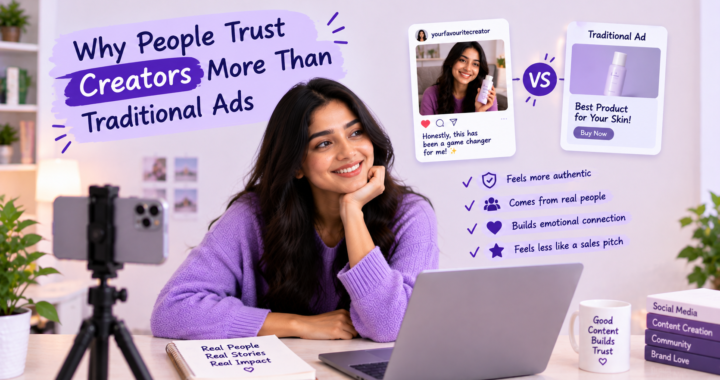
Finding the right influencer for your brand is not about choosing the person with the highest number of followers. It is about finding a creator whose audience, content, values, and influence match your brand’s goals.
In 2026, influencer marketing has become more strategic than ever. Brands are no longer only looking for likes, views, and followers. They want real trust, relevant audiences, measurable results, and creators who can communicate their message naturally.
A creator with 20,000 loyal followers can sometimes be more valuable than an influencer with 2 million random followers. Why? Because influence is not just about reach. It is about trust, relevance, and action.
So, if your brand is planning to work with influencers, the biggest question is not “Who is famous?” The real question is: “Who can influence the right audience for my brand?”
In this blog, let’s understand how to find the right influencer for your brand in 2026.
What Does “Right Influencer” Actually Mean?
The right influencer is someone who can connect your brand with the right audience in a believable and effective way.
A right influencer should have:
- An audience that matches your target customers
- Content style that fits your brand
- Good engagement quality
- Real followers
- Trust in their niche
- Professional communication
- Clear content delivery
- Brand-safe image
- Ability to explain or present your product naturally
For example, if you are a skincare brand, the right influencer may be a beauty creator, skincare educator, dermatologist, lifestyle creator, or self-care content creator. But if that creator’s audience is not interested in skincare, the campaign may not work even if the creator has many followers.
The right influencer is not always the most popular influencer. The right influencer is the one who can make your target audience care about your brand.
Why Choosing the Right Influencer Matters
Influencer marketing can give strong results, but only when the creator and brand fit each other.
If you choose the wrong influencer, you may face problems like:
- Low engagement
- Poor audience response
- Fake followers
- Irrelevant reach
- Weak content quality
- Wasted budget
- No leads or sales
- Brand image mismatch
But if you choose the right influencer, your brand can get:
- Better awareness
- More trust
- Relevant audience reach
- Higher engagement
- Stronger social proof
- Better content
- More qualified leads
- Higher chances of conversion
That is why influencer selection is one of the most important parts of influencer marketing.
How to Find the Right Influencer for Your Brand in 2026
Here is a practical step-by-step process brands can follow.
1. Start With Your Campaign Goal
Before searching for influencers, first define your campaign goal.
Ask yourself:
What do we want from this influencer campaign?
Your goal can be:
- Brand awareness
- Product launch
- Website traffic
- Lead generation
- App downloads
- Sales
- Social media engagement
- Store visits
- Event promotion
- User-generated content
- Product reviews
Your goal will decide which type of influencer you should choose.
For example:
If your goal is awareness, you may need creators with good reach.
If your goal is sales, you may need creators with strong trust and buying influence.
If your goal is UGC content, you need creators who can produce high-quality videos or photos.
If your goal is local visibility, nano or micro creators from a specific city may work better.
Without a clear goal, influencer selection becomes random.
2. Understand Your Target Audience
The next step is to clearly understand your target audience.
You should know:
- Who are your ideal customers?
- What is their age group?
- Where are they located?
- What language do they prefer?
- What problems do they face?
- Which platforms do they use?
- What kind of creators do they follow?
- What content do they trust?
For example, if your brand sells fitness supplements for young gym-goers, your audience may be active on Instagram, YouTube, and fitness communities. In this case, fitness trainers, gym creators, sports nutrition creators, and transformation coaches may be relevant.
If your brand sells B2B software, LinkedIn creators, business educators, startup creators, and industry experts may be a better fit.
You should not choose an influencer only because you like their content. Choose them because your customer trusts them.
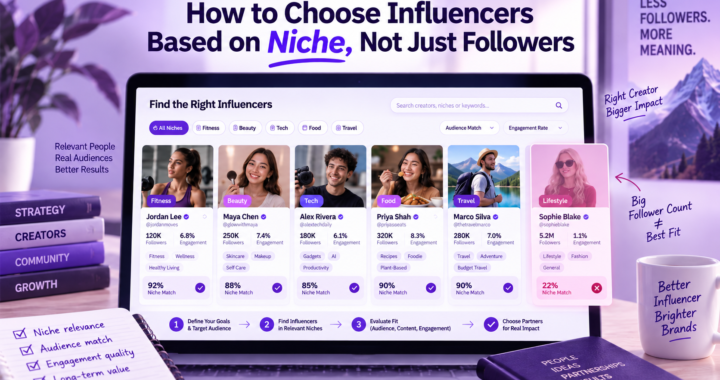
3. Choose the Right Influencer Category
Every influencer has a content niche. This niche tells you what type of audience they attract.
Common influencer categories include:
- Fashion
- Beauty
- Fitness
- Food
- Travel
- Technology
- Finance
- Parenting
- Education
- Gaming
- Business
- Lifestyle
- Health and wellness
- Entertainment
- Automobile
- Real estate
- Career and jobs
The influencer category should match your product category or your audience’s interest.
For example:
A baby care brand should work with parenting creators, mom bloggers, pediatric educators, or family lifestyle creators.
A fintech brand may work with finance creators, business creators, startup educators, or money management creators.
A food delivery app may work with food bloggers, local city creators, students, or lifestyle influencers.
Category match is important because the audience follows that creator for a specific reason. If your brand does not fit that reason, the promotion may feel forced.
4. Don’t Choose Influencers Only by Follower Count
Follower count is visible, but it is not the full truth.
Many brands make the mistake of thinking:
More followers = better influencer.
But that is not always true.
A creator with a smaller but highly engaged audience can give better results than a big creator with low trust or irrelevant followers.
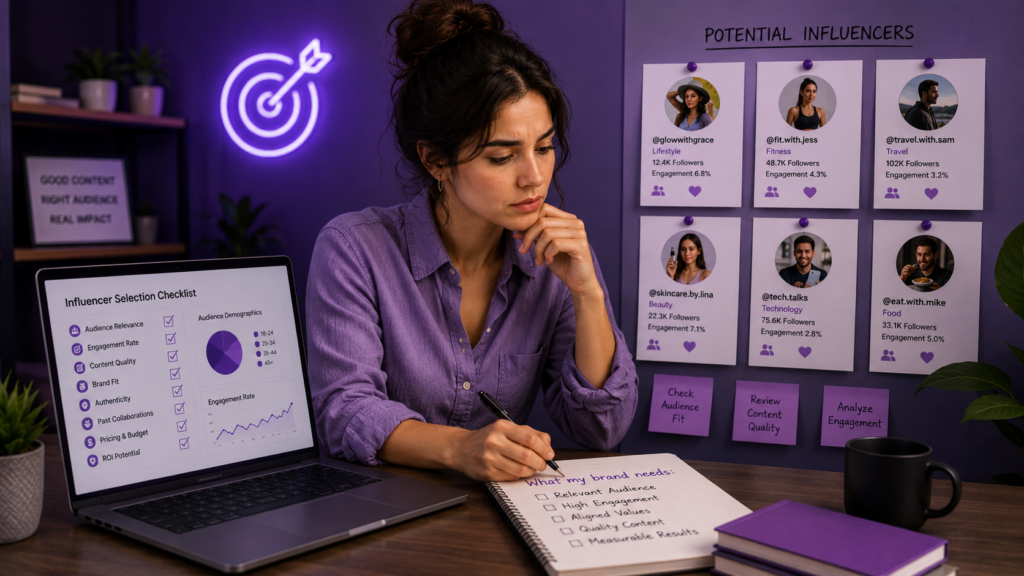
Instead of only checking followers, brands should check:
- Engagement rate
- Comment quality
- Audience relevance
- Content consistency
- Profile authenticity
- Past campaign results
- Audience location
- Content format quality
- Brand alignment
In 2026, smart brands are moving away from vanity metrics and focusing more on real impact.
So, do not ask only, “How many followers does this creator have?”
Ask, “Are these the right followers for my brand?”
5. Check Audience Relevance
Audience relevance is one of the most important factors in influencer selection.
An influencer may have a large audience, but if that audience is not your potential customer, your campaign may not perform well.
Check these things:
- Audience age
- Audience gender
- Audience location
- Audience interests
- Audience language
- Audience buying behavior
- Audience comments
- Audience pain points
For example, if your brand serves Indian small businesses, then an influencer with a strong Indian business audience is more useful than a global entertainment creator with millions of followers.
If your product is premium, you need an audience that can afford it. If your product is local, you need an audience from that location. If your product is for students, you need creators followed by students.
Good influencer marketing starts with audience match.
6. Analyze Engagement Quality
Engagement is not just about likes and comments. You need to check the quality of engagement.
Look at the influencer’s recent posts and ask:
- Are people commenting genuinely?
- Are comments related to the content?
- Do people ask questions?
- Do followers trust the creator?
- Are there too many generic comments?
- Are likes and comments balanced with follower count?
- Does the creator reply to comments?
- Do people save or share their content?
Generic comments like “Nice,” “Great post,” “Amazing,” or repeated emoji comments may not always show real engagement.
Good engagement usually includes meaningful comments, questions, opinions, personal experiences, and active audience interaction.
A creator with a smaller but active community can be more useful than a creator with big numbers but weak engagement.
7. Review Content Quality and Style
The influencer’s content style should match your brand.
Check:
- Video quality
- Audio quality
- Editing style
- Storytelling
- Caption writing
- Visual presentation
- Product explanation ability
- Creativity
- Consistency
- Overall tone
For example, if your brand wants premium positioning, the creator’s content should also feel clean, high-quality, and trustworthy.
If your brand is fun and youth-focused, then a creator with humorous, casual, and energetic content may be a better fit.
Also check whether the creator can explain products properly. Some creators are good at entertainment but not good at product education. Some creators are excellent at reviews but may not be suitable for lifestyle storytelling.
Choose based on the content format your campaign needs.
8. Check Brand Fit and Values
Brand fit means the influencer’s personality, content, and public image should match your brand.
Before selecting an influencer, check:
- Does their content match your brand image?
- Have they promoted similar brands before?
- Do they promote too many random products?
- Is their tone suitable for your audience?
- Are there any controversial posts?
- Do they use language that fits your brand?
- Would your customers trust this creator?
For example, a financial education brand should avoid creators who regularly promote risky or misleading money schemes. A family product brand should avoid creators whose content may not be suitable for family audiences.
Your influencer is not just promoting your product. They are temporarily representing your brand.
That is why brand fit is important.
9. Check for Fake Followers and Fake Engagement
Fake followers are a serious problem in influencer marketing.
Some creators may have bought followers, fake likes, automated comments, or bot engagement. This can make their profile look popular, but it may not produce real results.
Signs of fake followers may include:
- Sudden follower growth
- Very low engagement rate
- Too many generic comments
- Comments from suspicious accounts
- Followers from unrelated countries
- Repeated emoji comments
- High followers but low views
- Low story views compared to follower count
- Unnatural like-to-comment ratio
Brands should always check authenticity before finalizing an influencer.
A real creator with 15,000 genuine followers is better than a fake creator with 2 lakh followers.
10. Look at Past Brand Collaborations
Past collaborations can tell you a lot about an influencer’s professionalism.
Check:
- Which brands have they worked with?
- Was the content natural or forced?
- Did the audience respond well?
- Did they disclose paid collaborations properly?
- Was the product integrated smoothly?
- Did they work with competing brands?
- Do they promote too many brands too frequently?
If an influencer promotes every product without any clear niche, the audience may stop trusting them.
But if they choose collaborations carefully and present them naturally, that is a good sign.
You can also ask the influencer for past campaign results, media kits, audience insights, or case studies if available.
11. Check Platform Fit
Different platforms work for different goals.
Instagram is useful for lifestyle, fashion, beauty, food, fitness, and short-form content.
YouTube is useful for detailed reviews, tutorials, product explanations, comparisons, and long-form trust-building.
LinkedIn is useful for B2B, SaaS, business, career, leadership, and professional services.
Facebook can be useful for community-based audiences, regional content, and older age groups.
Short-form video platforms are useful for fast reach, awareness, and trending content.
Before choosing an influencer, ask:
Where does my target audience spend time?
The right platform is just as important as the right creator.
12. Match Influencer Type With Campaign Budget
Influencers are usually divided into different levels:
Nano Influencers
Nano influencers have a smaller audience but often strong personal trust.
They are useful for:
- Local campaigns
- Early-stage brands
- Community marketing
- Low-budget campaigns
- Authentic product reviews
Micro Influencers
Micro influencers have a larger audience than nano creators and usually strong niche influence.
They are useful for:
- D2C brands
- Startups
- Niche products
- Performance-focused campaigns
- Trust-based promotions
Macro Influencers
Macro influencers have a large audience and wider reach.
They are useful for:
- Brand awareness
- Product launches
- Larger campaigns
- Mass visibility
Celebrity Influencers
Celebrity influencers have very high reach and public recognition.
They are useful for:
- Big brand campaigns
- National-level awareness
- Premium launches
- Large-scale visibility
The best option depends on your goal and budget.
If your budget is small, start with nano and micro influencers. If your goal is mass awareness, macro or celebrity influencers may be suitable.
13. Ask for Creator Insights
Before finalizing an influencer, ask for basic creator insights.
You can request:
- Audience demographics
- Audience location
- Average reach
- Average story views
- Average reel views
- Engagement rate
- Previous campaign results
- Content pricing
- Deliverables
- Timeline
- Platform analytics screenshot
This helps you make a data-backed decision.
Do not rely only on what is visible on the profile. Internal insights can show whether the creator’s audience actually matches your target market.
14. Evaluate Communication and Professionalism
Influencer collaboration is not only about content. It is also about communication.
A good influencer should be professional in:
- Replying on time
- Understanding campaign briefs
- Sharing clear pricing
- Meeting deadlines
- Following brand guidelines
- Asking relevant questions
- Sending content for approval if required
- Reporting performance after posting
If the influencer is unprofessional during the discussion stage, they may also be difficult during the campaign.
Professional behavior is a strong sign of a reliable creator.
15. Start With a Small Test Campaign
If you are working with an influencer for the first time, avoid spending your full budget immediately.
Start with a small test campaign.
You can test:
- One reel
- One story set
- One product review
- One YouTube integration
- One UGC video
- One affiliate campaign
After the test, check the results.
If the creator performs well, you can build a long-term partnership.
This approach reduces risk and helps you understand which creators actually work for your brand.
Important Questions to Ask Before Choosing an Influencer
Before finalizing an influencer, ask these questions:
- Does this influencer’s audience match our target customer?
- Is their engagement real and meaningful?
- Does their content style fit our brand?
- Have they worked with similar brands before?
- Are their followers genuine?
- Can they explain our product clearly?
- Do they understand the campaign goal?
- Is their pricing suitable for our budget?
- Can we track campaign performance?
- Will this creator make our brand look trustworthy?
If the answer is yes to most of these questions, the influencer may be a good fit.
Red Flags Brands Should Avoid
Here are some warning signs to watch out for:
- Very high followers but very low engagement
- Too many fake-looking comments
- No clear niche
- Promoting too many unrelated brands
- Poor communication
- No audience insights
- Unclear pricing
- Past controversial content
- Fake claims about results
- Refusal to share basic performance data
- Content that does not match your brand values
If you notice multiple red flags, it is better to avoid that influencer.
Best Way to Find Influencers in 2026
Brands can find influencers in different ways:
- Searching manually on Instagram, YouTube, or LinkedIn
- Checking hashtags
- Looking at competitors’ influencer campaigns
- Using influencer marketplaces
- Asking customers which creators they follow
- Checking niche communities
- Using creator discovery platforms
- Running open collaboration campaigns
Manual searching can work, but it takes time. You have to check profiles, message creators, compare pricing, verify followers, and manage communication separately.
This is where platforms like Influnets can help.
Influnets is designed to make influencer discovery and brand collaboration easier by helping brands connect with relevant creators for their campaigns.
Instead of randomly searching for influencers, brands can use a platform to discover creators based on category, audience, collaboration type, and campaign needs.
How Influnets Can Help Brands Find the Right Influencer
Influnets helps brands simplify the influencer discovery process.
For brands, this means:
- Easier creator discovery
- Better category-based search
- Faster collaboration planning
- Clearer communication
- Better campaign matching
- More organized influencer selection
Whether you are a startup, D2C brand, local business, agency, or growing company, Influnets can help you find creators who are more relevant to your campaign goals.
The future of influencer marketing is not about finding the biggest influencer. It is about finding the most relevant creator.
And that is exactly what brands should focus on in 2026.
Conclusion
Finding the right influencer for your brand in 2026 requires more than checking follower count.
You need to understand your campaign goal, target audience, influencer niche, engagement quality, content style, authenticity, brand fit, and performance potential.
The right influencer is someone who can connect your brand with the right people in a natural and trustworthy way.
Before choosing any influencer, ask yourself:
Does this creator have the audience we want to reach?
Does their content match our brand?
Do people trust them?
Can we measure the results?
If the answer is yes, that influencer may be the right fit for your brand.
Influencer marketing can become a powerful growth channel, but only when brands choose creators carefully.
With platforms like Influnets, brands can make this process easier, faster, and more organized.
FAQs
How do I find the right influencer for my brand?
To find the right influencer, define your campaign goal, understand your target audience, choose the right niche, check engagement quality, review content style, verify audience authenticity, and make sure the creator matches your brand values.
What should brands check before hiring an influencer?
Brands should check audience relevance, engagement rate, fake followers, content quality, past collaborations, audience location, platform fit, professionalism, pricing, and campaign performance potential.
Is follower count important in influencer marketing?
Follower count is important, but it should not be the only factor. Audience quality, engagement, trust, niche relevance, and content style are more important for campaign success.
Which type of influencer is best for small brands?
Nano and micro influencers are often good for small brands because they are usually more affordable and have stronger personal connections with their audience.
How can I know if an influencer has fake followers?
You can check fake followers by looking at sudden follower growth, low engagement, generic comments, suspicious accounts, low views, and audience mismatch. Brands can also use influencer analysis tools for deeper verification.
What is a good influencer for a brand?
A good influencer for a brand is someone whose audience matches the brand’s target customers, whose content style fits the brand, and whose followers trust their recommendations.
Should brands work with micro influencers in 2026?
Yes, many brands work with micro influencers because they often have niche audiences, stronger engagement, and better trust compared to larger but less focused creators.
How can Influnets help brands find influencers?
Influnets helps brands discover and connect with relevant creators based on campaign needs, creator category, and collaboration goals, making influencer selection easier and more organized.