People are exposed to ads every day.
They see ads on social media, websites, YouTube, apps, search engines, television, billboards, and many other places. Because of this, many customers have learned to ignore direct advertising.
They scroll past sponsored posts.
They skip video ads.
They close pop-ups.
They ignore banners.
They question brand claims.
But when a creator they follow talks about a product, people often pay more attention.
Why?
Because creators feel more human than ads.
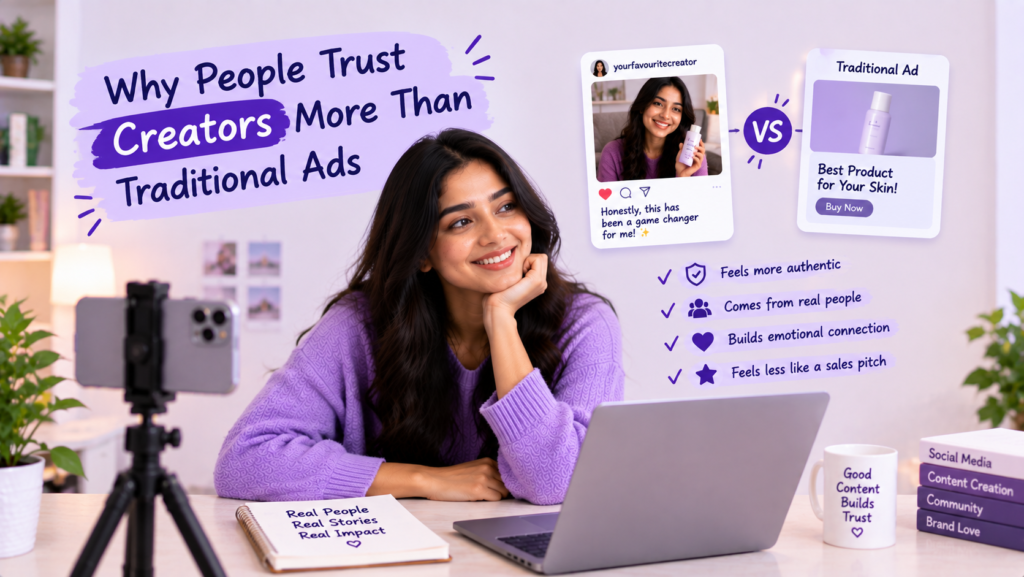
A traditional ad usually comes directly from a brand. It is designed to sell. But creator content feels more like a recommendation, review, experience, or conversation.
This is why people often trust creators more than traditional ads.
For brands, this shift is very important. Customers no longer want only polished advertisements. They want real experiences, useful content, honest opinions, and social proof.
In this blog, we will explain why people trust creators more than traditional ads and how brands can use creator-led marketing to build stronger customer trust.
What Are Traditional Ads?
Traditional ads are promotional messages created and controlled by brands.
These ads can appear in many formats, such as:
- Television ads
- Newspaper ads
- Radio ads
- Billboards
- Magazine ads
- Banner ads
- YouTube ads
- Instagram ads
- Facebook ads
- Search ads
- Display ads
- App ads
- Sponsored posts created by brands
Traditional ads usually focus on promoting a product, service, offer, or brand message.
For example, a skincare brand may run an ad saying, “Our moisturizer gives smooth and glowing skin.”
A food delivery app may run an ad saying, “Order food in 30 minutes.”
A SaaS brand may run an ad saying, “Grow your business with our platform.”
Traditional ads can be useful. They help brands reach people at scale. They are good for awareness, offers, retargeting, product launches, and lead generation.
But traditional ads often face one major challenge: trust.
Customers know that the brand is trying to sell something. So, they may not believe every claim immediately.
What Is Creator-Led Marketing?
Creator-led marketing is a marketing approach where brands work with creators, influencers, or UGC creators to promote, explain, review, or showcase a product.
Creators can make content such as:
- Product reviews
- Tutorials
- Reels
- YouTube videos
- Shorts
- Stories
- Testimonials
- Unboxing videos
- UGC videos
- App walkthroughs
- Product demos
- Lifestyle content
- Comparison videos
- Problem-solution videos
Creator-led marketing works because creators already have a relationship with their audience.
Their followers may trust their opinions, content style, lifestyle, expertise, or personal experience.
When a creator shares a product naturally, it feels less like a direct advertisement and more like a recommendation.
Why Do People Trust Creators More Than Traditional Ads?
1. Creators Feel More Human
Traditional ads are usually polished, scripted, and brand-controlled.
Creators feel more personal.
They talk in their own voice.
They show their real experiences.
They explain products in simple language.
They interact with followers.
They answer questions.
They share daily life moments.
This human connection makes creator content feel more relatable.
For example, a brand ad may show a perfect studio-shot product video. But a creator may show how they actually use the product at home, in their routine, or during a real situation.
That real-life feeling helps build trust.
2. Creators Have Built Relationships With Their Audience
People do not trust creators overnight.
Trust builds over time.
Followers may watch a creator for weeks, months, or years. They see their content regularly, understand their personality, and become familiar with their opinions.
This repeated connection creates a relationship.
So, when the creator recommends a product, the audience may take it more seriously than a random ad from a brand they do not know.
For brands, this is powerful because they can reach customers through someone the audience already listens to.
3. Creator Content Feels Like a Recommendation
People often trust recommendations more than advertisements.
If a friend recommends a restaurant, you may be more likely to try it.
If a colleague recommends a tool, you may be more open to using it.
If a creator recommends a product they genuinely use, you may pay attention.
Creator content feels closer to a recommendation than a sales message.
This is especially true when the creator explains:
- Why they like the product
- How they use it
- What problem it solves
- Who it is useful for
- What their honest experience was
Traditional ads often say, “Buy this.”
Creator content often says, “Here is how this helped me.”
That difference matters.
4. Creators Show Real Product Usage
Traditional ads may show the best version of a product.
Creators often show the product in real situations.
For example:
A beauty creator shows how a skincare product fits into a morning routine.
A fitness creator shows how a product works during a workout.
A food creator tastes and reviews a restaurant dish.
A tech creator explains how an app works on screen.
A parenting creator shows how a baby product is used at home.
This real usage helps customers understand the product better.
People want to see proof, not only promises.
Creator content gives them that proof in a more natural format.
5. Creators Explain Products in Simple Language
Many brand ads use polished lines, taglines, or marketing language.
Creators usually explain products in a more simple and relatable way.
They may say:
“This is useful if you face this problem.”
“I used this for 7 days and here is what I noticed.”
“This feature helped me save time.”
“This is good for beginners.”
“This may work if you want something budget-friendly.”
This type of explanation helps customers understand the product faster.
For brands, creators can make the message easier to understand.
6. Creators Create Social Proof
Social proof means people feel more confident when they see others using or recommending something.
Creator content creates social proof because it shows that a real person is talking about the brand.
This is especially useful for:
- New brands
- Startups
- Small businesses
- D2C brands
- Apps
- SaaS products
- Local businesses
- Personal care brands
- Food brands
- Education platforms
When customers see multiple creators talking about a brand, they may start feeling that the brand is more credible.
Traditional ads can create awareness, but creator content can create social proof.
7. Creators Can Answer Audience Questions
Traditional ads are usually one-way communication.
The brand shows an ad, and the audience watches it.
Creator content can become two-way communication.
Followers may ask questions in comments or DMs, such as:
- Is this product good?
- How much does it cost?
- Where can I buy it?
- Is it suitable for beginners?
- Does it work for oily skin?
- Is this app free?
- How was your experience?
- Would you recommend it?
Creators can reply, explain, or create follow-up content.
This interaction increases trust because the audience feels heard.
8. Creators Are More Relatable Than Celebrities or Brand Ads
Many customers relate more to creators than celebrities.
Creators may look like regular people with real routines, real problems, and real experiences.
This relatability is important.
For example, a small business owner may relate more to a business creator than a celebrity ad. A college student may trust a student creator more than a polished education ad. A young parent may trust a parenting creator more than a generic baby product ad.
People trust those who feel closer to their lifestyle.
Creators often create that closeness.
9. Creator Content Feels Less Interruptive
Traditional ads often interrupt the user experience.
A person may be watching a video, scrolling a feed, or reading something, and an ad suddenly appears.
This can feel annoying.
Creator content usually appears as part of the content people already choose to watch.
If someone follows a beauty creator, they expect beauty content. If the creator shares a skincare product naturally, it fits the content experience.
This makes creator-led promotion feel less interruptive and more acceptable.
10. Creators Build Niche Trust
Different creators build trust in different niches.
For example:
- Beauty creators build trust around skincare and makeup.
- Fitness creators build trust around workouts and health products.
- Finance creators build trust around money topics.
- Tech creators build trust around gadgets and apps.
- Food creators build trust around restaurants and food products.
- Business creators build trust around tools, SaaS, and growth ideas.
This niche trust helps brands reach audiences that already care about the category.
A direct ad may reach people broadly. A creator can reach people with stronger category interest.
Traditional Ads Are Still Useful
This does not mean traditional ads are useless.
Traditional ads still play an important role in marketing.
They are useful for:
- Mass awareness
- Retargeting
- Lead generation
- Sales campaigns
- Product launches
- Offer promotion
- App installs
- Website traffic
- Search visibility
- Scaling campaigns
Social media ads, search ads, and video ads can help brands reach targeted audiences quickly.
The real point is this:
Traditional ads are good for reach and scale.
Creators are good for trust and relatability.
The best brands use both together.
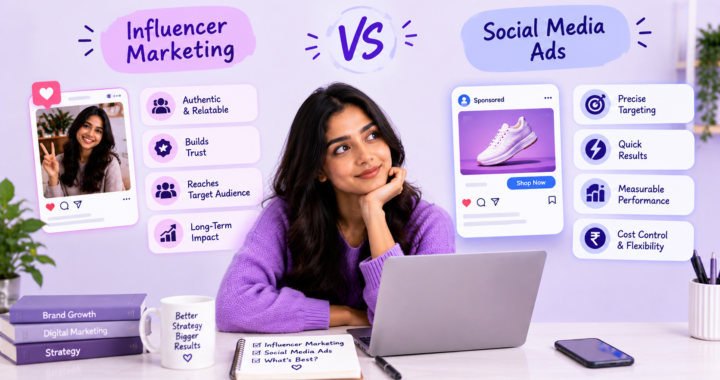
Creator Marketing vs Traditional Ads: Simple Difference
| Point | Creator Marketing | Traditional Ads |
| Main strength | Trust and relatability | Reach and control |
| Communication style | Human and conversational | Brand-led and promotional |
| Audience response | Feels like recommendation | Feels like advertisement |
| Content style | Natural, real, creator-led | Polished, scripted, brand-controlled |
| Best for | Trust, social proof, product education | Awareness, retargeting, scaling |
| Control | Less control, more creator voice | More brand control |
| Credibility | Comes from creator relationship | Comes from brand reputation |
| Customer perception | More relatable | More promotional |
Both have value. The right choice depends on your brand goal.
Why Brands Should Care About Creator Trust
Trust affects buying decisions.
Before people buy, they usually want confidence.
They may ask:
- Is this product genuine?
- Is the brand reliable?
- Will this work for me?
- Is it worth the price?
- Has someone actually used it?
- What do real people think?
Creator content helps answer these questions.
For new brands, this is very useful because they may not yet have strong reviews, recognition, or market reputation.
Creators can help brands build trust faster by showing real product use and audience conversations.
How Brands Can Use Creator Trust Effectively
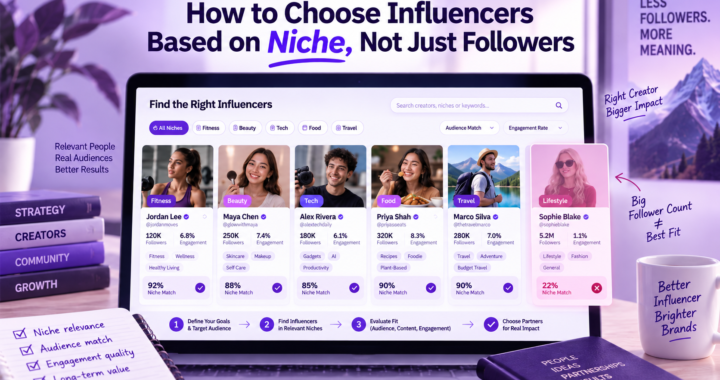
1. Choose the Right Creator
Trust only works when the creator matches the brand.
Brands should check:
- Niche
- Audience relevance
- Engagement quality
- Content style
- Comment quality
- Audience location
- Brand fit
- Past collaborations
- Authenticity
A creator should not be chosen only by follower count.
2. Let Creators Speak Naturally
Creator content works best when it sounds real.
If the brand controls every word, the content may feel like an ad.
Give creators a clear brief, but allow them to explain the product in their own style.
3. Focus on Product Experience
Do not ask creators to only say promotional lines.
Let them show:
- How the product works
- What problem it solves
- How they used it
- Who it is useful for
- What they genuinely noticed
Experience-based content builds stronger trust.
4. Use UGC Content
UGC content feels like real customer-style content.
Brands can use UGC for:
- Social media
- Ads
- Websites
- Landing pages
- Product pages
- Testimonials
UGC content can make brand communication more human.
5. Track Audience Response
Brands should track how people respond to creator content.
Check:
- Comments
- Saves
- Shares
- Story replies
- Link clicks
- Product questions
- Website visits
- Leads
- Sales
- Coupon code usage
Audience response tells you whether trust is converting into action.
Examples of Creator Trust in Different Industries
Beauty and Skincare
People often trust beauty creators because they show real routines, product texture, usage, and results.
A skincare brand can use creators to explain how a product works and who should use it.
Food and Restaurants
Food creators help people decide where to eat.
A local restaurant can build trust through creator visit videos, honest reviews, and food experience reels.
Fitness
Fitness creators can show products or services in real workout situations.
A gym, supplement brand, or fitness app can use creators to demonstrate practical value.
Technology and Apps
Tech creators can simplify features, explain use cases, and show product demos.
This helps customers understand digital products faster.
Finance
Finance creators can explain complicated topics in simple language.
For fintech brands, creator trust is important because people are careful with money-related decisions.
Education
Education creators can help students and parents understand courses, platforms, and learning tools.
Trust matters strongly in education because people want reliable guidance.
Common Mistakes Brands Make With Creator Marketing
1. Choosing Creators Only by Followers
A large audience does not always mean high trust.
Brands should check audience quality and engagement.
2. Making Content Too Scripted
Over-scripted content feels like an ad and reduces creator authenticity.
3. Ignoring Audience Fit
If the creator’s audience does not match the brand’s target customers, trust may not convert into results.
4. Not Checking Fake Followers
Fake followers can make a creator look popular but provide no real value.
5. Not Tracking Results
Brands should use UTM links, coupon codes, landing pages, and performance reports.
6. Treating Creator Marketing Like One-Time Posting
Trust builds over time. Long-term creator relationships can work better than random one-time posts.
Best Strategy: Combine Creators With Ads
Creators and ads do not have to compete.
Brands can use both together.
A smart strategy can look like this:
Step 1: Work With Relevant Creators
Creators introduce the brand, explain the product, and build trust.
Step 2: Identify Best-Performing Content
Check which creator videos get strong engagement, comments, saves, shares, or clicks.
Step 3: Use Creator Content in Ads
With proper usage rights, run ads using the best creator content.
Step 4: Retarget Interested Users
Show ads to people who watched, clicked, visited the website, or engaged with the brand.
Step 5: Build Long-Term Creator Partnerships
Continue working with creators who bring quality audience response.
This gives brands both trust and scale.
How Influnets Can Help Brands Work With Trusted Creators
Finding trusted creators manually can take time.
Brands need to search profiles, check engagement, review content, verify audience quality, compare creators, discuss pricing, and manage collaborations.
Influnets helps brands discover and connect with relevant creators for influencer campaigns.
With Influnets, brands can find creators based on category, audience fit, campaign needs, and collaboration type.
For brands, the goal is not only to find popular creators.
The goal is to find creators who can build trust with the right audience.
When brands work with the right creators, marketing becomes more human, relatable, and effective.
Conclusion
People trust creators more than traditional ads because creators feel human, relatable, and familiar.
Traditional ads are controlled by brands, while creator content feels like a recommendation, review, or personal experience.
Creators build trust through real usage, niche expertise, audience relationships, social proof, and two-way conversations.
This does not mean ads are not useful. Ads are still powerful for reach, retargeting, and scaling. But when brands need trust, authenticity, and customer confidence, creator-led marketing can play a very important role.
The best modern marketing strategy is not creators vs ads.
It is creators plus ads.
Creators help build trust.
Ads help scale the message.
For brands that want to connect with customers in a more real and relatable way, working with the right creators can make a big difference.
FAQs
Why do people trust creators more than ads?
People trust creators more than ads because creators feel more human, relatable, and authentic. Their content often looks like a real recommendation or personal experience instead of a direct sales message.
Are creators more effective than traditional ads?
Creators can be more effective for trust, social proof, product education, and relatable content. Traditional ads can be more effective for reach, targeting, retargeting, and scaling. The best choice depends on the campaign goal.
Why do brands work with creators?
Brands work with creators to build trust, reach niche audiences, create authentic content, explain products, generate social proof, and influence customer decisions.
What makes creator content trustworthy?
Creator content feels trustworthy when it is honest, natural, relevant, experience-based, and aligned with the creator’s usual content style.
Are traditional ads still useful?
Yes, traditional ads are still useful for awareness, reach, retargeting, lead generation, sales campaigns, and scaling. They work even better when combined with creator content.
How can brands choose trusted creators?
Brands should check audience relevance, engagement quality, comment quality, niche fit, content style, follower authenticity, past collaborations, and brand alignment before choosing a creator.
Can creator content be used in ads?
Yes, brands can use creator content in ads if they have proper usage rights from the creator. UGC and influencer content can make ads feel more relatable and natural.
How can Influnets help brands find creators?
Influnets helps brands discover and connect with relevant creators for influencer campaigns, making creator discovery and collaboration planning more organized.