Getting brand collaborations is not only about having a large number of followers.
Many creators think brands only notice influencers with lakhs of followers. But today, brands also look at small creators, nano influencers, micro influencers, UGC creators, and niche content creators who have real engagement and clear audience value.
A creator with 5,000 genuine followers, a clear niche, good content quality, and professional communication can be more attractive to a brand than a creator with 1 lakh followers but poor engagement and random content.
Your influencer profile is your first impression.
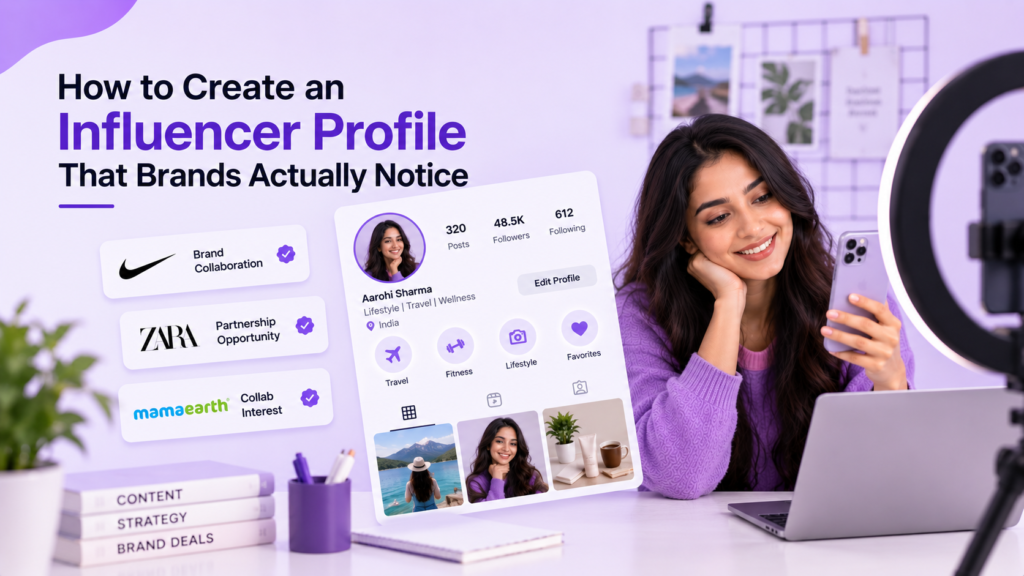
When a brand visits your profile, they should quickly understand:
Who you are.
What type of content you create.
Who your audience is.
Why your content is valuable.
How they can contact you.
Whether you are suitable for collaboration.
If your profile is confusing, incomplete, or unprofessional, brands may leave without contacting you.
In this blog, we will explain how to create an influencer profile that brands actually notice and how creators can make their profile collaboration-ready.
Why Your Influencer Profile Matters
Your profile is like your creator portfolio.
Before a brand messages you, they usually check your profile first. They look at your bio, content quality, engagement, niche, audience fit, past collaborations, and overall presentation.
A strong influencer profile helps you:
- Look more professional
- Build trust with brands
- Show your niche clearly
- Attract relevant collaborations
- Improve your chances of paid campaigns
- Make brand decision-making easier
- Stand out from other creators
A weak profile can make brands confused.
For example, if your bio does not explain your niche, your content is inconsistent, and your contact details are missing, a brand may not know whether you are open for collaborations.
Brands are busy. Make your profile easy to understand.
What Do Brands Look for in an Influencer Profile?
Before optimizing your profile, you should understand what brands usually check.
Brands often look at:
- Niche clarity
- Audience relevance
- Content quality
- Engagement quality
- Posting consistency
- Follower authenticity
- Brand-safe content
- Previous collaborations
- Creator personality
- Contact details
- Professionalism
- Ability to create useful content
Brands do not only ask, “How many followers does this creator have?”
They ask:
“Does this creator match our brand?”
“Does their audience match our customers?”
“Can they create content that supports our campaign?”
“Do people actually trust and engage with them?”
“Will this creator be professional to work with?”
Your profile should answer these questions clearly.
How to Create an Influencer Profile That Brands Actually Notice
1. Choose a Clear Niche
Your niche is the main topic or category you create content around.
A clear niche helps brands understand what type of audience you attract.
Common influencer niches include:
- Beauty
- Fashion
- Fitness
- Food
- Travel
- Technology
- Finance
- Parenting
- Education
- Gaming
- Lifestyle
- Health and wellness
- Career
- Business
- Local city content
- Home decor
- Personal care
- Productivity
If your profile has too many random topics, brands may not understand your audience.
For example, if you post skincare tips, food reviews, memes, finance advice, and travel videos randomly, your profile may feel unclear.
But if your content focuses on skincare and beauty, beauty brands can easily understand your value.
You do not need to restrict your personality. But your main content direction should be clear.
2. Write a Strong Bio
Your bio is one of the most important parts of your influencer profile.
A good bio should quickly explain who you are and what you create.
Your bio should include:
- Your niche
- Your location, if relevant
- Your audience or content promise
- Your collaboration contact
- Your creator identity
- Your platform or content format, if needed
Good Bio Formula
Who you are + What you create + Who you help/attract + Contact
Example:
“Skincare & beauty creator
Simple routines for Indian skin
Delhi | Reels | Reviews | UGC
Collab: yourmail@example.com”
Another example:
“Food creator from Mumbai
Cafés, street food & hidden gems
Reels | Reviews | Local collabs
Email: yourmail@example.com”
Another example:
“Fitness creator
Home workouts, gym tips & healthy habits
Helping beginners stay consistent
Collab: yourmail@example.com”
Your bio should not be too long or confusing. Keep it clear and brand-friendly.
3. Add Contact Details
If brands cannot contact you easily, you may lose opportunities.
Add a professional email address in your bio or contact button.
Avoid using only personal DMs as the main contact option. DMs can get missed.
Use an email that looks professional.
Example:
yourname.collab@gmail.com
yourname.creator@gmail.com
yourname.media@gmail.com
If you use an influencer marketplace like Influnets, also keep your profile updated there so brands can discover and contact you more easily.
4. Use a Clear Profile Photo
Your profile photo should be clear and recognizable.
If you are a personal creator, use a clean photo of yourself. If you are a faceless creator, use a clean logo or identity-based image.
Avoid profile photos that are:
- Blurry
- Too dark
- Too crowded
- Hard to recognize
- Random screenshots
- Low-quality graphics
Your profile photo helps brands remember you.
A clean and confident profile picture makes your profile look more trustworthy.
5. Pin Your Best Content
Most platforms allow creators to pin posts, reels, or videos.
Use pinned content smartly.
Pin content that shows your best work.
You can pin:
- Your best-performing reel
- Your best product review
- Your strongest niche content
- Your introduction video
- Your previous brand collaboration
- Your UGC sample
- Your most helpful educational post
- Your best storytelling content
Pinned content should help brands quickly understand your content quality and audience response.
Do not pin random posts just because they are old or personal. Pin content that represents your creator value.
6. Organize Your Highlights
If you use Instagram, highlights are very useful for brand discovery.
Create organized highlights such as:
- About Me
- Collabs
- Reviews
- UGC
- Results
- Testimonials
- PR
- Travel
- Food
- Fashion
- Skincare
- Fitness
- Events
For example, if you are a beauty creator, you can create highlights like:
- Skincare
- Makeup
- Reviews
- Collabs
- UGC
- Results
If you are a food creator, you can create:
- Cafés
- Restaurants
- Street Food
- Collabs
- Reviews
- Events
Highlights help brands quickly explore your work without scrolling through your full profile.
7. Keep Your Content Consistent
Consistency shows that you are serious about content creation.
Brands prefer creators who post regularly and maintain a clear content style.
This does not mean you must post every day. But your profile should look active.
You can follow a simple schedule like:
- 3 reels per week
- 2 posts per week
- Daily stories
- 1 long-form video per week
- 1 review video per week
Choose a schedule that you can maintain.
If your last post was three months ago, brands may think you are not active.
Consistency builds trust with your audience and with brands.
8. Improve Content Quality
Good content quality can help small creators stand out.
You do not need expensive equipment, but your content should be easy to watch and understand.
Focus on:
- Good lighting
- Clear audio
- Stable video
- Clean background
- Strong opening hook
- Clear storytelling
- Simple editing
- Useful captions
- Product visibility
- Natural speaking style
- Platform-friendly format
Brands want creators who can present products or messages properly.
If your content is clear, engaging, and useful, brands are more likely to notice you.
9. Show Your Personality
Brands do not only hire numbers. They hire people.
Your profile should show your personality, voice, and point of view.
This helps brands understand whether you are a good fit for their campaign.
Show your personality through:
- Stories
- Captions
- Voiceovers
- Behind-the-scenes content
- Honest reviews
- Personal experiences
- Daily routine content
- Educational opinions
- Audience conversations
Do not copy every trend blindly. Trends can bring reach, but personality builds trust.
Brands like creators who have a clear voice and real audience connection.
10. Build Real Engagement
Engagement quality is very important.
Brands check whether your audience actually interacts with you.
Real engagement includes:
- Meaningful comments
- Story replies
- Saves
- Shares
- Poll responses
- Questions from followers
- Product-related discussions
- DM inquiries
- Audience feedback
To build engagement:
- Ask questions in captions
- Reply to comments
- Use polls and Q&A
- Create useful content
- Share honest opinions
- Encourage audience discussion
- Post content people want to save or share
Avoid fake followers, fake likes, or comment pods. Brands can often identify fake engagement.
Real engagement is more valuable than fake popularity.
11. Create Brand-Style Sample Content
If you have not worked with brands yet, create sample brand-style content.
This helps brands see what you can create.
You can create sample content using products you already own or use.
Examples:
- Product review
- Unboxing video
- Tutorial
- Before-after content
- Product demo
- Styling video
- Food review
- App review
- Voiceover video
- Testimonial-style video
- Problem-solution video
For example, if you are a skincare creator, create a sample routine video using products you genuinely use.
If you are a tech creator, create a short app demo.
If you are a food creator, create a café review reel.
This gives brands confidence in your content ability.
12. Show Previous Collaborations Clearly
If you have already worked with brands, show it properly.
You can add:
- Collaboration highlight
- Pinned brand post
- Portfolio link
- Media kit
- Case study
- Testimonials
- Campaign screenshots
But avoid making your profile look like only advertisements.
Your profile should have a balance of organic content and brand content.
If every post is a promotion, your audience may lose trust, and brands may feel your profile is too commercial.
13. Create a Simple Media Kit
A media kit is a short creator portfolio that you can share with brands.
It helps brands understand your profile quickly.
Your media kit should include:
- Your name
- Profile link
- Niche
- Location
- Audience demographics
- Follower count
- Average reach
- Average views
- Engagement rate
- Content formats
- Previous collaborations
- Best content examples
- Collaboration packages
- Contact details
If you are a small influencer, do not worry if your numbers are not huge. Show your strengths clearly.
For example:
- Strong local audience
- High engagement
- Good content quality
- Niche expertise
- UGC creation ability
- Audience trust
A clean media kit can make you look more professional.
14. Mention Collaboration Options
Brands should understand what kind of collaboration you offer.
You can mention it in your media kit, profile, or marketplace listing.
Collaboration options can include:
- Instagram Reel
- Instagram Story
- YouTube Short
- YouTube video
- Product review
- Unboxing video
- UGC video
- Product photography
- Giveaway
- Event visit
- Local business review
- Affiliate collaboration
- Brand ambassador partnership
- LinkedIn post
When brands know what you offer, it becomes easier for them to approach you.
15. Keep Your Profile Brand-Safe
Brands care about reputation.
Before working with you, they may check whether your profile is safe for their brand image.
Avoid content that may create unnecessary risk, such as:
- Offensive language
- Misleading claims
- Hate speech
- Fake product claims
- Too many controversies
- Spammy promotions
- Irrelevant adult or harmful content
- False before-after results
- Copy-pasted content
You do not need to become boring. But you should be responsible.
If you want serious brand collaborations, your content should be trustworthy and professional.
16. Make Your Audience Clear
Brands want to know who follows you.
If possible, mention audience details in your media kit or marketplace profile.
Include:
- Audience age
- Audience gender split, if relevant
- Top cities
- Top countries
- Main interests
- Average views
- Average reach
- Story views
- Engagement rate
For example:
“Major audience: Indian women aged 18–34 interested in skincare, beauty, and lifestyle.”
Or:
“Audience: Food lovers in Delhi NCR, mostly aged 18–35.”
This helps brands decide whether your audience matches their target customers.
Example of a Brand-Friendly Influencer Profile
Here is an example of a good creator profile structure.
Bio Example
“Fashion & lifestyle creator
Affordable styling ideas for Indian women
Delhi NCR | Reels | UGC | Reviews
Collab: yourmail@example.com”
Highlights
- About
- Collabs
- UGC
- Reviews
- Styling
- Results
Pinned Posts
- Best styling reel
- Product review video
- Introduction video
Content Mix
- Styling tips
- Outfit reels
- Product reviews
- Daily lifestyle stories
- Brand collaboration samples
- Audience Q&A
This type of profile makes it easy for fashion and lifestyle brands to understand the creator’s value.
Common Mistakes Influencers Make on Their Profiles
1. No Clear Niche
If brands cannot understand what type of creator you are, they may not approach you.
2. No Contact Details
Missing email or contact details can make brands skip your profile.
3. Random Content
Posting too many unrelated topics can confuse brands and followers.
4. Poor Content Quality
Bad lighting, unclear audio, and messy visuals can reduce brand interest.
5. Fake Followers
Fake followers damage trust and can hurt future collaboration opportunities.
6. Too Many Paid Promotions
If every post is sponsored, the audience may stop trusting your recommendations.
7. Weak Bio
A bio that does not explain your niche, location, or collaboration option can reduce opportunities.
8. No Pinned Work
If your best work is buried deep in your profile, brands may not see it.
9. Unprofessional Communication
Even if your profile is good, poor communication can make brands avoid collaboration.
10. Not Sharing Insights
Brands need data. If you cannot share basic audience and performance insights, they may hesitate.
Checklist: Is Your Influencer Profile Brand-Ready?
Use this checklist before pitching brands:
- Is your niche clear?
- Does your bio explain what you create?
- Is your contact email visible?
- Is your profile photo clean?
- Have you pinned your best content?
- Are your highlights organized?
- Do you post consistently?
- Is your content quality good?
- Do you have real engagement?
- Do your comments look genuine?
- Do you have sample brand-style content?
- Do you have a simple media kit?
- Are your audience insights ready?
- Is your profile brand-safe?
- Can brands quickly understand your value?
If the answer is yes to most of these, your profile is ready for brand collaborations.
How Influnets Can Help Creators Get Noticed by Brands
Getting noticed by brands manually can take time.
Creators often have to pitch brands, send DMs, follow up, share media kits, and explain their value repeatedly.
Influnets helps creators and brands connect more easily.
As a creator, having a clear and complete profile on Influnets can help brands understand your niche, content style, audience, and collaboration options.
For brands, Influnets helps them discover relevant creators for campaigns.
For creators, Influnets can help increase visibility in front of brands that are actively looking for influencer collaborations and UGC creators.
If you want brands to notice you, make your profile clear, professional, and easy to evaluate.
Conclusion
Creating an influencer profile that brands notice is not about looking famous. It is about looking clear, professional, trustworthy, and relevant.
Brands want creators who understand their niche, create good content, have real engagement, communicate professionally, and can connect with the right audience.
To make your profile brand-ready, choose a clear niche, write a strong bio, add contact details, pin your best content, organize highlights, post consistently, improve content quality, and prepare a simple media kit.
Avoid fake followers, random content, unclear communication, and too many unrelated promotions.
Remember, brands do not always choose the biggest creator.
They choose the creator who fits their campaign best.
If your profile clearly shows your value, brands are more likely to notice you, trust you, and collaborate with you.
FAQs
How do I make my influencer profile attractive to brands?
To make your influencer profile attractive to brands, choose a clear niche, write a strong bio, add contact details, pin your best content, organize highlights, post consistently, show real engagement, and prepare a simple media kit.
What should influencers write in their bio for brand collaborations?
Influencers should mention their niche, location, content type, audience focus, and collaboration email in their bio. The bio should quickly explain who they are and what kind of content they create.
Do brands care about follower count?
Yes, brands check follower count, but it is not the only factor. Brands also care about audience relevance, engagement quality, content style, niche clarity, authenticity, and professionalism.
Can small influencers get noticed by brands?
Yes, small influencers can get noticed by brands if they have a clear niche, genuine engagement, good content quality, and an audience that matches the brand’s target customers.
What should I include in my influencer media kit?
Your media kit should include your name, profile link, niche, location, audience demographics, follower count, average reach, average views, engagement rate, content formats, past collaborations, sample work, and contact details.
Should influencers create sample brand content?
Yes, sample brand-style content helps brands understand your content quality and collaboration potential, especially if you have not worked with brands before.
Why are brands not noticing my influencer profile?
Brands may not notice your profile if your niche is unclear, your bio is weak, contact details are missing, content is inconsistent, engagement looks fake, or your profile does not clearly show your value.
How can Influnets help creators get brand collaborations?
Influnets helps creators and brands connect more easily by making creator discovery more organized for brands and helping creators become more visible for relevant collaboration opportunities.